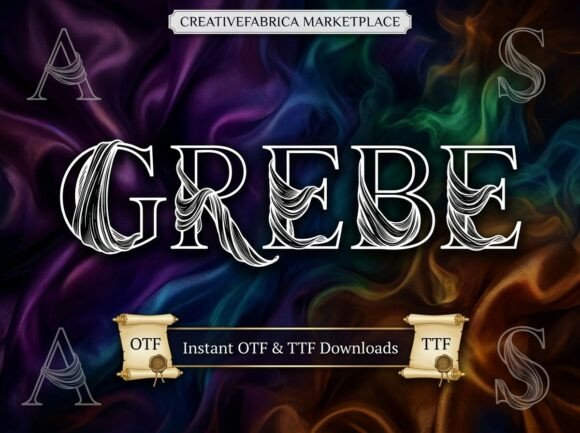
Grebe: Wrapping Digital Design in Theatrical Luxury
In an era dominated by minimalist sans-serifs and utilitarian interface design, a counter-movement is emerging that craves texture, narrative, and ornamentation. Designers and brand strategists are increasingly seeking typographic solutions that do more than convey information; they must evoke emotion and establish immediate atmospheric context. Enter Grebe, a sophisticated display typeface that captures a theatrical-and-regal soul. This font features bold, classical serif letterforms uniquely integrated with rhythmic, flowing drapery motifs that cascade across each character. With its sturdy structural weight and high-end dramatic personality, Grebe is the premier choice for independent theater branding, luxury textile logos, upscale interior design signage, and high-impact opulent-and-artistic social media headers.
The relevance of Grebe extends beyond mere aesthetics. It addresses a specific gap in the current creative landscape where digital experiences often feel sterile. As audiences spend more time interacting with flat screens, there is a growing psychological demand for visual elements that suggest tactility and depth. Grebe satisfies this need by translating the physical language of fabric and stagecraft into vector-based typography. It is not simply a font to be read; it is a texture to be felt, bridging the divide between traditional craftsmanship and modern digital application.
The Resurgence of Ornamental Typography in Modern Branding
For much of the last decade, the prevailing trend in typography was reduction. Brands stripped away serifs, flattened logos, and optimized for legibility at microscopic sizes on mobile devices. While functional, this homogenization created a sea of sameness. Today, we are witnessing a correction. The market is shifting toward "maximalist elegance," where detail is no longer seen as clutter but as a signal of value and intention.
Grebe sits at the intersection of this shift. It rejects the notion that luxury must be quiet or understated. Instead, it embraces the baroque and the dramatic, aligning with a broader cultural appreciation for heritage and performance. This evolution is driven by changing consumer habits; audiences now associate intricate detailing with authenticity and human touch, qualities that are scarce in AI-generated or template-driven content. When a brand chooses a typeface with integrated drapery motifs, they are signaling that their identity has been curated with the same care as a costume or an architectural facade.
This trend is also influenced by the maturation of high-resolution display technology. Retina screens and 4K monitors have removed the technical barriers that once discouraged complex typography. Designers no longer need to fear that delicate ligatures or ornamental swashes will pixelate or blur. Grebe leverages this technological freedom, offering crisp, intricate details that reward close inspection while maintaining enough structural weight to remain commanding at a distance.
Defining the Theatrical Soul: Structure Meets Fluidity
What distinguishes Grebe from other decorative scripts or vintage revivals is its duality. Many ornamental fonts sacrifice readability for style, resulting in letterforms that are beautiful but illegible. Grebe maintains a sturdy structural weight rooted in classical serif traditions. The bones of the letters are solid and authoritative, ensuring that the text remains grounded even as the drapery motifs add movement and softness.
This balance is critical for professional applications. In independent theater branding, for example, the title of a production must be evocative of the play’s mood while remaining instantly readable on a poster viewed from across a street. The flowing elements of Grebe suggest curtains parting or costumes in motion, providing immediate semantic cues about the nature of the performance. Yet, because the underlying letterforms are robust, the audience can parse the information without cognitive strain.
The integration of these motifs is organic rather than superimposed. The drapery does not look like a clip-art overlay; it emerges from the strokes themselves. This cohesion is what gives the typeface its regal soul. It mimics the way heavy velvet falls or how silk gathers, creating a sense of gravity and material presence. For designers, this means the font carries its own built-in art direction, reducing the need for excessive supporting graphics to establish a luxurious tone.
Practical Applications Across Luxury and Creative Sectors
Understanding where and how to deploy Grebe is essential for maximizing its impact. Its specialized nature makes it unsuitable for body copy or user interface text, but it excels in high-visibility display environments where atmosphere is paramount.
Independent Theater and Performance Arts
Theater is perhaps the most natural home for Grebe. Independent troupes and festival organizers often struggle to differentiate themselves from mainstream commercial productions. Using Grebe allows these organizations to visually communicate the intimacy and artistry of live performance. The typeface works exceptionally well for season announcements, playbills, and promotional merchandise. Its dramatic personality mirrors the emotional stakes of the stage, helping to build anticipation before the curtain rises.
Luxury Textiles and Fashion Branding
For fashion labels and textile manufacturers, typography must echo the quality of the product. A logo set in a generic sans-serif can undermine the perception of hand-woven fabrics or bespoke tailoring. Grebe’s rhythmic, flowing drapery motifs create a direct visual link to the materials being sold. It is particularly effective for brands specializing in evening wear, bridal couture, or heritage textiles. The font suggests movement and drape, allowing the brand identity to embody the physical characteristics of the cloth itself.
Upscale Interior Design and Hospitality
In the realm of interior design and boutique hospitality, signage is an extension of the spatial experience. Wayfinding and entrance signage set the expectation for what lies within. Grebe offers a solution for spaces that aim to feel curated and immersive, such as speakeasies, luxury hotels, or antique galleries. The typeface’s regal bearing complements rich material palettes like brass, marble, and dark wood. It transforms functional signage into a decorative element that reinforces the venue's narrative.
Opulent Social Media Headers and Digital Content
Social media platforms are increasingly becoming stages for personal and corporate branding. In a feed saturated with bright colors and bold sans-serifs, Grebe provides a moment of pause. Its complexity demands attention and slows the scroll. For creators, educators, and marketers focusing on art history, luxury lifestyle, or performance, using Grebe in headers and story templates establishes a consistent, high-end aesthetic. It signals to the audience that the content following is thoughtful, researched, and aesthetically considered.
Navigating Workflow and Pairing Strategies
Incorporating a highly stylized typeface like Grebe into a modern workflow requires intentionality. Because it carries so much visual weight, it functions best when treated as a focal point rather than a workhorse. Designers should approach Grebe as they would a lead actor in a scene; it needs space to perform and supporting elements that enhance rather than compete with it.
Pairing Recommendations:
- Neutral Sans-Serifs: To let Grebe shine, pair it with clean, geometric sans-serifs for subheads and body copy. The contrast between the ornate display face and the utilitarian text creates a sophisticated hierarchy.
- Muted Serifs: For a more traditional, editorial look, combine Grebe with a restrained transitional serif. Ensure the secondary serif lacks the decorative flourishes of Grebe to avoid visual conflict.
- Generous Whitespace: Luxury is often defined by what is absent. Surround Grebe with ample negative space to prevent the design from feeling cluttered. The breathing room enhances the regal quality of the letterforms.
Technical Considerations:
- Hierarchy Management: Reserve Grebe strictly for headlines, titles, and short phrases. Never use it for paragraphs or captions. Its intricate details become noise at small sizes.
- Color and Texture: Grebe responds beautifully to metallic foils, embossing, and gradient treatments in print. Digitally, it holds up well against dark backgrounds, where the drapery motifs can appear to catch light.
- Accessibility Awareness: While Grebe is legible for a display font, always ensure sufficient contrast ratios. Avoid placing it over busy photographic backgrounds where the drapery details might merge with the image.
The Future of Expressive Digital Identity
The adoption of typefaces like Grebe represents a maturing of digital design culture. We are moving past the phase where digital had to mimic print, and past the subsequent phase where print tried to mimic digital. Instead, we are entering an era of synthesis, where the expressive capabilities of traditional arts are reimagined through contemporary tools.
For professionals and creators, this means expanding the typographic toolkit beyond safe choices. It involves recognizing that type is not just a vessel for words but a primary carrier of brand meaning. Grebe offers a tangible way to wrap designs in luxury, providing a distinct voice in a crowded marketplace. Whether for a theater company seeking to honor its craft, a textile brand emphasizing its weave, or a digital creator curating an opulent feed, Grebe proves that functionality and fantasy can coexist.
Ultimately, the choice to use Grebe is a choice to prioritize atmosphere. It acknowledges that in a world of infinite content, the feeling a design evokes is just as important as the information it conveys. By integrating the timeless language of drapery and classical structure, Grebe ensures that luxury remains not just a visual style, but a resonant, enduring experience.