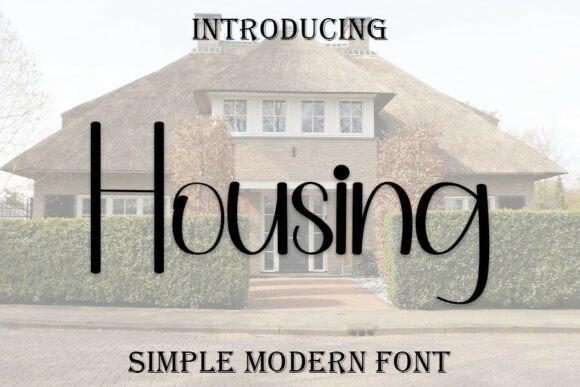
Housing Font: Elegant Script for Modern Design
In the crowded landscape of digital typography, finding a typeface that balances genuine warmth with professional polish is a constant challenge for designers and marketers. Housing emerges as a distinctive solution to this dilemma, offering a sweet and cursive handwritten aesthetic that feels both intimate and refined. Unlike rigid display fonts or overly chaotic novelty scripts, Housing occupies a versatile middle ground. It provides the organic flow of natural handwriting while maintaining enough structural integrity to function effectively in commercial and personal projects. For creators aged twenty to fifty who need to convey emotion without sacrificing legibility, this font serves as a reliable tool for elevating visual communication.
Defining the Character of Housing
The primary strength of Housing lies in its ability to humanize digital content. In an era dominated by clean sans-serifs and geometric precision, audiences often crave a tactile connection. Housing delivers this through gentle curves and a rhythmic baseline that mimics the cadence of a felt-tip pen or fine marker. It avoids the excessive swashes that plague many script fonts, which can often render text unreadable at smaller sizes. Instead, it focuses on clarity wrapped in elegance.
This typeface carries a joyful yet romantic undertone, making it emotionally resonant. However, it stops short of being childish or overly sentimental. The letterforms possess a mature confidence that allows them to sit comfortably alongside modern minimalist layouts. When evaluating Housing for your toolkit, consider it as a bridge between casual friendliness and sophisticated branding. It suggests that a brand or individual is approachable and authentic, yet still pays meticulous attention to detail.
Strategic Applications in Branding and Identity
For entrepreneurs and freelancers building a personal brand, typography acts as the voice of their visual identity. Housing excels in logo design and wordmarks where distinctiveness is paramount. Because the font has a unique handwritten texture, it prevents logos from looking generic or template-based. A bakery, a boutique law firm focusing on family law, or a wellness coach could all utilize Housing to signal empathy and care. The key is moderation; using this font for a primary logotype creates an immediate emotional hook that standard serif fonts cannot achieve.
Beyond logos, Housing is invaluable for supporting brand collateral. Business cards, letterheads, and packaging labels benefit from the contrast this script provides against body copy. When paired with a neutral sans-serif like Helvetica or Inter, Housing draws the eye to critical information such as taglines, signatures, or special offers. This hierarchy guides the viewer’s attention naturally, improving the overall user experience of physical and digital assets. For small business owners managing their own marketing, this built-in visual hierarchy reduces the cognitive load required to create effective layouts.
Elevating Wedding and Event Stationery
The wedding industry demands typography that feels timeless yet current. Housing fits seamlessly into this niche because it mirrors the style of modern calligraphy without the prohibitive cost of custom hand-lettering. Invitations, save-the-dates, and seating charts require high legibility alongside decorative flair. Housing performs exceptionally well here because its x-height is generous, ensuring that names and dates remain clear even when printed on textured paper or viewed on mobile screens.
Event planners and DIY couples should leverage Housing for more than just headlines. It works beautifully for menu items, favor tags, and welcome signs. The font’s romantic quality enhances the atmosphere of the event, reinforcing the theme through consistent typographic choices. Furthermore, because Housing retains a casual elegance, it suits a wide range of wedding aesthetics, from rustic barn celebrations to chic urban gatherings. It avoids the stiffness of traditional engraving scripts while maintaining the formality required for such occasions.
Digital Marketing and Social Media Engagement
Social media feeds are saturated with bold, shouting graphics. Housing offers a quieter, more inviting alternative that can actually increase engagement through contrast. Content creators and social media managers can use this font to create thumb-stopping visuals that feel personal rather than promotional. Quote cards, announcement overlays, and story highlights gain a layer of authenticity when set in Housing. Followers are more likely to engage with content that feels like a note from a friend rather than an advertisement from a corporation.
For email marketers, Housing can transform transactional messages into relational touchpoints. Using this script for personalized greetings or sign-offs in newsletters breaks the monotony of standard web-safe fonts. It signals to the subscriber that there is a real person behind the brand. However, technical implementation matters. Always ensure you have web-licensed versions if embedding the font directly, or convert text to images for universal rendering. When used strategically in digital campaigns, Housing softens the sales pitch and fosters community loyalty.
Fashion, Editorial, and Lookbook Design
In fashion and lifestyle publishing, typography sets the mood before a single photograph is processed. Housing brings a editorial softness to lookbooks and magazine spreads. It pairs particularly well with high-contrast photography, acting as a visual palate cleanser between intense imagery. Fashion bloggers and independent designers can use Housing to annotate photos, create pull quotes, or design cover titles that feel curated and artistic.
The font’s versatility extends to product packaging within the fashion sector. Hangtags, tissue paper patterns, and shopping bags branded with Housing suggest a bespoke, artisanal quality. This perception of value is crucial for independent labels competing with fast fashion. By utilizing a typeface that implies handcrafted care, brands can justify premium pricing and build a narrative around sustainability and slow fashion. The font becomes part of the product's story, enhancing the unboxing experience and encouraging social sharing.
Practical Considerations for Implementation
While Housing is remarkably versatile, successful implementation requires adherence to typographic best practices. First and foremost, avoid setting long paragraphs in this font. As a display typeface, it is designed for short bursts of text. Extended reading in any script causes eye fatigue; reserve Housing for headlines, captions, and accents of three lines or fewer. Let your body copy handle the heavy lifting of information delivery.
Pairing is equally critical. Housing has significant personality, so it needs a supportive partner. Avoid pairing it with other scripts or highly decorative serifs, as this creates visual noise. Instead, opt for clean, structured typefaces that provide stability. A geometric sans-serif offers a modern counterpoint, while a classic transitional serif adds traditional gravitas. Test your pairings at various sizes to ensure the weight balance feels correct. Housing should feel like the melody, while your body font provides the rhythm section.
- Licensing Compliance: Always verify whether your license covers commercial use, web embedding, or merchandise. Personal licenses rarely cover client work or products for sale.
- Spacing Adjustments: Handwritten fonts often require manual kerning adjustments, especially in all-caps settings (if available) or tight headline spaces. Don't rely solely on default metrics.
- Color Selection: Housing responds well to muted, organic tones and pastels. High-saturation neons can sometimes clash with the font’s gentle nature unless used very intentionally for ironic effect.
- Accessibility: Ensure sufficient contrast ratios when using Housing over backgrounds. While beautiful, script fonts can be harder to read for visually impaired users, so never use it for essential navigation or critical legal text.
Ultimately, Housing is more than just a pretty face; it is a functional design asset that solves specific communication problems. Whether you are designing a wedding suite, launching a skincare line, or refreshing a blog, this typeface offers a shortcut to emotional resonance. By understanding its strengths and respecting its limitations, professionals and hobbyists alike can harness the power of handwritten typography to create work that is not only seen but deeply felt. In a digital world that often feels impersonal, Housing reminds us that good design still has room for a human touch.