Kortefa: Bold Rounded Display Font for Modern Brands
There is a distinct moment in every creative project when you realize the standard sans serif options simply lack the personality your message requires. You need something that commands attention without shouting, a typeface that feels substantial yet approachable. This is precisely where Kortefa enters the conversation. As a bold rounded display font, it occupies a unique space in modern typography, balancing heavy visual weight with soft, inviting curves. It isn't just another decorative option; it is a strategic tool for designers and marketers who understand that shape influences perception just as much as the words themselves.
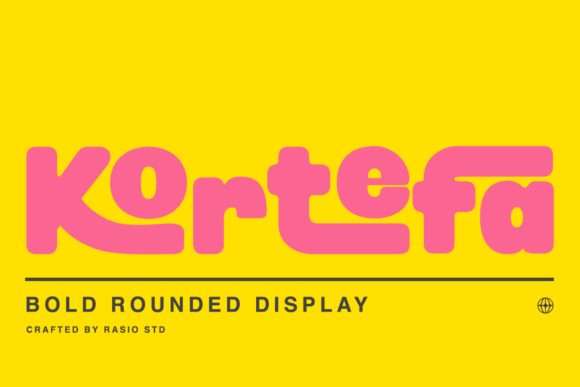
Kortefa distinguishes itself through its chunky, smooth letterforms that avoid the rigidity often associated with bold weights. Where traditional heavy fonts can feel industrial or aggressive, this typeface introduces a friendly cadence through its rounded terminals and generous counters. The result is a strong visual presence that remains accessible. For entrepreneurs and content creators targeting audiences aged 20 to 50, this balance is critical. It signals professionalism and stability while maintaining the warmth necessary for building genuine connections in digital and print environments.
Defining Visual Personality Through Soft Geometry
The psychology of typography suggests that rounded shapes are inherently perceived as safer, kinder, and more innovative than their sharp-edged counterparts. Kortefa leverages this principle effectively. Its thick strokes provide the authority needed for headlines, but the softened edges prevent the design from feeling imposing. This makes it an exceptional choice for brands in wellness, technology, children’s products, food and beverage, and lifestyle sectors where trust and comfort are paramount.
When evaluating Kortefa against other creative font options, consider its versatility within a brand identity system. Unlike a script font, which can struggle with legibility at smaller sizes or in all-caps settings, or a traditional serif font, which may skew too formal for contemporary startups, Kortefa offers a middle ground. It possesses the structural integrity of a geometric sans serif but carries the humanist qualities of a handwritten font. This hybrid nature allows it to anchor a logo design or serve as the primary heading style across a website without overwhelming the user experience.
Strategic Applications Across Media
Understanding where to deploy this premium font is just as important as selecting it. Because of its high x-height and open apertures, Kortefa excels in environments where quick recognition is essential. Social media graphics benefit significantly from its bold silhouette, ensuring text remains readable even when scaled down for mobile feeds. In packaging design, the chunky letterforms create shelf impact, differentiating products from competitors using thinner, more delicate typography.
- Editorial Design: Use Kortefa for pull quotes, chapter titles, or magazine covers to break up dense body copy and add rhythmic visual interest.
- Web Design: Implement as H1 and H2 tags to establish clear hierarchy. Its modern aesthetic pairs well with minimalist UI layouts.
- Merchandise and Apparel: The friendly curves translate beautifully to embroidery and screen printing, where fine details often get lost.
- Event Branding: Ideal for festival posters, workshop flyers, and conference badges where energy and inclusivity must be communicated instantly.
For bloggers and publishers, consistency is key to audience retention. Using Kortefa as a signature element in featured images or newsletter headers creates a cohesive visual thread. Readers begin to associate those specific rounded forms with your content before they even read the headline. This level of recognition is difficult to achieve with generic system fonts and is the hallmark of intentional editorial strategy.
Mastering Font Pairing and Hierarchy
A common mistake when working with such a distinctive display font is pairing it with another typeface that competes for attention. Kortefa has enough character to stand alone as the star of the show. Your supporting cast should be understated. A clean, neutral sans serif font like Inter, Helvetica Now, or DM Sans provides the perfect counterbalance. These typefaces offer excellent readability for long-form body text without introducing conflicting stylistic quirks.
If your project demands a more traditional or sophisticated tone, consider pairing Kortefa with a modern serif font. The contrast between the soft, bold geometry of Kortefa and the structured elegance of a serif creates a dynamic tension that feels both curated and contemporary. This combination works particularly well in luxury e-commerce or artisanal branding, where you want to merge playfulness with heritage. Avoid pairing it with other rounded fonts or decorative scripts, as this dilutes the impact and muddies the visual hierarchy.
Practical Considerations for Implementation
Before committing Kortefa to a commercial project, conduct thorough testing across intended mediums. Display fonts behave differently on screen versus paper. Test the tracking (letter-spacing) carefully; because the letterforms are naturally chunky, tightening the spacing too much can cause them to blob together, while excessive spacing can disconnect the word shapes. For headlines, slightly tighter tracking often enhances cohesion, but always verify legibility at the smallest anticipated viewing size.
Licensing is another non-negotiable aspect of professional typography. Ensure you acquire the appropriate commercial font license for your specific use case. Desktop licenses typically cover static print and image creation, while webfont licenses are required for embedding on websites. If you are creating logos or trademarks, verify that the license permits this usage, as some foundries require an upgraded tier for brand identity work. Respecting these terms protects your business legally and supports the type designers who craft these essential design assets.
Readability should always trump novelty. While Kortefa is designed for display purposes, ensure it serves the content rather than distracting from it. Reserve it for short bursts of text—headlines, subheads, captions, and calls to action. For paragraphs exceeding three lines, revert to a highly legible text face. This disciplined approach ensures that when Kortefa does appear, it retains its power and effectiveness.
Ultimately, choosing a typeface is an exercise in defining voice. Kortefa speaks with confidence and warmth, making it a valuable asset for creatives who refuse to compromise between impact and approachability. Whether you are refreshing a personal blog, launching a new product line, or designing a campaign for a global audience, this typeface offers the flexibility and character needed to make your work resonate. By understanding its strengths, respecting its limitations, and pairing it thoughtfully, you transform a simple font selection into a foundational element of successful visual communication.