Implementing Chunky Sunday in Modern Retro Design Workflows
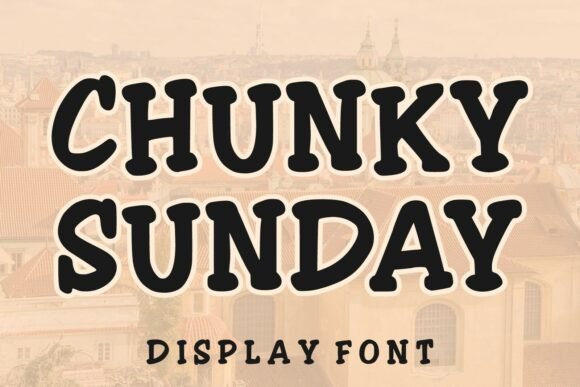
Selecting the right typeface is rarely just an aesthetic decision; it is a strategic component of visual communication that dictates hierarchy, tone, and readability. For designers, marketers, and business owners navigating the current resurgence of vintage aesthetics, Chunky Sunday serves as a specialized tool within the broader design system. This bold retro display font features thick, rounded letterforms that balance a playful vintage character with the structural integrity required for modern commercial applications. Understanding where this typeface fits into your production pipeline ensures that its nostalgic warmth enhances rather than distracts from your core message.
Unlike versatile sans-serif workhorses intended for body copy, Chunky Sunday operates as a high-impact asset reserved for specific functional roles. Its strong and friendly style makes it ideal for capturing attention in saturated markets, but successful implementation requires intentional planning. Whether you are designing packaging, developing a brand identity, or creating social media assets, integrating this font effectively means treating it as a distinct layer in your creative workflow rather than a default setting.
Strategic Positioning in the Creative Process
The decision to utilize Chunky Sunday should occur during the conceptualization and mood-boarding phases, well before final layout execution. Because this typeface carries significant visual weight, it defines the spatial requirements of a project early on. During the initial sketching or wireframing stage, designers must account for the font’s expanded width and rounded terminals. These characteristics consume more horizontal space than standard geometric sans-serifs, influencing grid systems and container sizing.
In branding projects, Chunky Sunday functions best as a primary logotype or a secondary headline face. It establishes an immediate emotional connection, signaling approachability and heritage. However, it is crucial to validate its legibility at various scales during the testing phase. While the thick strokes remain crisp on large-format posters and t-shirt designs, they can merge or lose definition at smaller sizes. Establishing minimum size guidelines early in the brand book prevents usability issues downstream.
Pre-Production Compatibility Checks
Before committing to Chunky Sunday for a multi-platform campaign, verify technical compatibility across your software stack. Retro display fonts often include unique ligatures, alternates, or stylistic sets that define their character. Ensure your design environment supports OpenType features to access these nuances. Additionally, if the project involves web deployment or digital advertising, confirm licensing terms and file format availability. Web-safe alternatives or variable font versions may be necessary to maintain visual consistency between print collateral and digital interfaces.
Execution and Typographic Hierarchy
During the active design phase, Chunky Sunday demands a supportive typographic ecosystem. Its bold, rounded nature acts as a visual anchor, meaning surrounding elements must provide adequate contrast to prevent the layout from feeling heavy or cluttered. Pairing is not merely about finding a font that looks nice next to it; it is about establishing a functional hierarchy that guides the viewer’s eye efficiently.
- Contrast through Weight: Pair Chunky Sunday with light or regular-weight sans-serifs. The extreme difference in stroke thickness creates clear separation between headlines and supporting information.
- Geometric Harmony: Select body fonts with similar x-heights or geometric proportions to maintain underlying cohesion despite the stylistic contrast.
- Neutral Grounding: Use clean, modern neutrals for body text to let the retro personality of the display font shine without competing for attention.
- Spatial Breathing Room: Increase margins and padding around Chunky Sunday text blocks. The density of the letterforms requires negative space to remain readable and impactful.
When designing for physical products like packaging or apparel, consider the interaction between the font and the substrate. The rounded edges of Chunky Sunday translate beautifully to screen printing and embroidery, where sharp corners often degrade. However, on glossy paper or high-resolution screens, the softness of the curves can appear blurry if tracking is too tight. Adjusting letter spacing manually during the layout process ensures optimal optical alignment, particularly in all-caps settings where the rounded shapes can create awkward visual gaps.
Color and Texture Integration
The vintage character of Chunky Sunday interacts dynamically with color palettes and textures. In a practical workflow, treat the font as a graphical element that responds to environmental styling. Muted, warm tones enhance its nostalgic feel, while high-contrast neon combinations push it toward a contemporary retro-futurist aesthetic. When applying texture overlays—such as grain, halftone, or distress effects—apply them selectively. Over-texturing already thick letterforms can reduce legibility. Instead, use solid fills for the typeface and reserve textured treatments for backgrounds or secondary elements to maintain clarity.
Post-Production Quality Control and Consistency
After the initial design is complete, a rigorous review process ensures Chunky Sunday performs as intended across all deliverables. Quality control for display typography extends beyond spell-checking; it involves optical verification. What looks balanced on a 27-inch monitor may appear cramped on a mobile device or distorted on a curved bottle label. Create mockups that simulate real-world viewing conditions to catch scaling issues before production.
For teams managing ongoing campaigns or brand identities, documentation is essential for long-term consistency. Create a style guide section specifically dedicated to Chunky Sunday usage. This should include approved pairings, prohibited modifications (such as artificial stretching or condensing), and context-specific examples. Providing junior designers or external freelancers with clear parameters prevents brand dilution and reduces revision cycles.
- Audit Cross-Platform Rendering: Verify that the font renders consistently across different operating systems and browsers if used digitally.
- Test Accessibility Standards: Ensure color contrast ratios meet WCAG guidelines when using Chunky Sunday for essential information, as thick strokes can sometimes reduce perceived contrast.
- Validate Print Proofs: Always request physical proofs for packaging and merchandise to check ink spread and edge definition.
- Archive Source Files: Maintain organized libraries of approved layouts and presets to streamline future iterations.
Practical Applications Across Industries
The versatility of Chunky Sunday allows it to integrate into diverse professional workflows beyond traditional graphic design. Educators and content creators can leverage its friendly aesthetic to make learning materials and thumbnails more engaging without sacrificing professionalism. The rounded forms reduce cognitive load associated with harsher typographic styles, making it effective for headers in presentations, worksheets, and video overlays.
Small business owners and entrepreneurs often use this typeface to differentiate artisanal or lifestyle brands in competitive e-commerce spaces. On product listings, Chunky Sunday works effectively in banner graphics and promotional badges, drawing the eye to key selling points. Its retro association implies craftsmanship and authenticity, valuable attributes for businesses emphasizing quality over mass production. However, restraint is vital; limiting its use to one or two touchpoints per page maintains its specialness and prevents the interface from becoming visually noisy.
Marketers planning seasonal campaigns will find Chunky Sunday particularly efficient for time-sensitive projects. Its inherent vintage vibe eliminates the need for extensive custom illustration to establish a retro theme. By combining this typeface with simple photography or flat colors, teams can produce cohesive campaign assets rapidly. This efficiency supports agile marketing workflows where speed-to-market is critical, allowing resources to be allocated toward distribution and analytics rather than prolonged design exploration.
Long-Term Asset Management
Integrating Chunky Sunday into a sustainable workflow also involves considering its lifecycle. Trends shift, and today’s retro revival may evolve tomorrow. Design systems built around this font should be modular enough to allow for easy updates. Keep body copy and structural elements trend-neutral so that swapping out the display face in future rebrands does not require a complete overhaul. Documenting the rationale behind choosing Chunky Sunday helps future stakeholders understand whether its continued use aligns with evolving brand strategy or audience preferences.
Ultimately, Chunky Sunday is more than a decorative choice; it is a functional instrument for conveying warmth, confidence, and nostalgia. By approaching its selection and application with the same rigor applied to layout grids and color theory, professionals can harness its bold character to create work that is both emotionally resonant and commercially effective. Success lies not in the font itself, but in the thoughtful processes that surround it—from initial concept validation to final production checks. When integrated deliberately, Chunky Sunday transforms from a standalone typeface into a reliable partner in building memorable, readable, and enduring visual experiences.