Mariam: Elevating Design with Patterned Typography
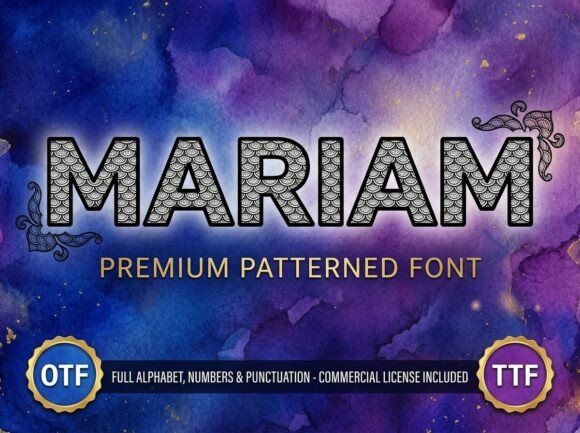
In the crowded landscape of digital typography, finding a display font that balances artistic flair with structural integrity is a genuine challenge. Mariam emerges as a sophisticated solution for designers seeking to add tactile depth to their visual projects without sacrificing legibility. This premium patterned typeface reimagines the classic bold sans-serif form by infusing it with an intricate, hand-drawn fish scale motif. The result is a letterform that functions as both text and illustration, offering a rich textural experience that standard solid fonts simply cannot replicate.
For creative professionals and business owners, typography is often the first point of emotional connection with an audience. Mariam bridges the gap between traditional typesetting and decorative art. By maintaining high-contrast black outlines around delicate internal scalloping, this typeface ensures that the ornate details remain crisp even when scaled for large-format printing or digital headers. It is not merely a novelty font; it is a strategic design tool intended for projects where craftsmanship and attention to detail are paramount.
The Anatomy of Textural Elegance
Understanding what makes Mariam effective requires looking beyond its surface decoration. Many patterned fonts fail because the texture compromises the underlying skeleton of the letter, making it difficult to read at smaller sizes or from a distance. Mariam avoids this pitfall through deliberate structural choices. The base architecture is a robust, bold sans-serif, providing a solid canvas for the internal artwork. This weight distribution allows the negative space within the scales to breathe, preventing the letters from appearing muddy or cluttered.
The hand-drawn quality of the scalloped pattern introduces an organic imperfection that digital perfectionism often lacks. In an era dominated by sterile, geometric vector graphics, this human touch signals authenticity. The high-contrast outlining acts as a containment field, defining the edges sharply against any background. This technical consideration is vital for practical application, ensuring that whether you are embossing on cotton paper or displaying on a retina screen, the integrity of the character remains intact.
Strategic Applications in Branding and Packaging
Mariam shines brightest in environments where the goal is to convey luxury, heritage, or artisanal quality. For boutique branding, this typeface serves as an immediate signifier of premium value. Consider a skincare line emphasizing natural ingredients or a craft distillery highlighting small-batch production. Using Mariam for the brand name or key product identifiers creates a visual metaphor for complexity and care. It tells the consumer that the same level of detail found in the typography exists within the product itself.
Packaging design benefits significantly from this textural approach. On shelf displays, solid colors can sometimes blend together, but patterned typography catches the eye through contrast and rhythm. Mariam works exceptionally well on matte finishes, textured cardstocks, and foil-stamped surfaces. The interplay between the physical substrate and the typographic texture adds a layer of sensory engagement that elevates the unboxing experience. However, restraint is necessary; because the font carries so much visual weight, it should be reserved for primary focal points rather than secondary information.
Enhancing Editorial and Event Aesthetics
Beyond commercial packaging, Mariam offers distinct advantages for editorial designers and event planners. Book covers, particularly in genres like literary fiction, poetry, or art history, require typography that sets a narrative tone before the reader opens the cover. Mariam provides a sense of established elegance and timeless beauty that aligns perfectly with these themes. Its decorative nature allows it to function as a central graphic element, potentially reducing the need for additional imagery and creating a cleaner, more typographically driven layout.
For high-end events such as galas, weddings, or gallery openings, the invitation suite sets the expectation for the occasion. Standard script fonts can sometimes feel cliché or overly formal. Mariam offers an alternative that feels celebratory yet modern. The scalloped pattern evokes associations with Art Deco glamour and maritime heritage, making it versatile for various thematic directions. When used for event headers or signage, the bold structure ensures readability across a room, while the intricate details reward closer inspection.
Practical Considerations for Implementation
To maximize the effectiveness of Mariam, designers must consider hierarchy and pairing. Because this typeface is inherently expressive, it demands a supportive cast of quieter, neutral typefaces. Pairing Mariam with a clean, lightweight sans-serif or a refined serif for body copy creates necessary contrast. Avoid combining it with other decorative or textured fonts, as this will create visual noise and diminish the impact of both choices. Let Mariam be the soloist, not part of a choir.
Technical execution also plays a role in successful implementation. When using Mariam in digital environments, test extensively across different screen resolutions. While the high-contrast outlines aid legibility, extremely small sizes on low-resolution displays may cause the internal patterns to alias or blur. Establish a minimum size threshold for web use to preserve the design's intent. In print, consult with your printer regarding trapping and registration if using multiple colors, though the font is often most striking in single-color applications where the outline and fill are unified.
- Hierarchy Management: Use exclusively for headlines, logos, or short phrases. Never use for paragraphs or extended reading.
- Color Strategy: Test the pattern in both light-on-dark and dark-on-light configurations. High contrast is essential for the internal details to register visually.
- Whitespace: Provide ample breathing room around the letterforms. Crowding Mariam reduces its elegance and makes the texture feel chaotic.
- Contextual Relevance: Ensure the organic, hand-drawn aesthetic aligns with your brand voice. It suits artisanal and luxury contexts better than corporate tech or minimalist finance.
The Value of Distinctive Typography
Investing in specialized display typefaces like Mariam is ultimately an investment in differentiation. In markets saturated with generic templates and safe design choices, distinctive typography acts as a competitive advantage. It communicates professionalism and intentionality. When a client or customer encounters a design featuring Mariam, they perceive a level of customization and thoughtfulness that builds trust and engagement.
Efficiency in design does not always mean speed; it means achieving maximum communicative impact with minimal elements. Mariam accomplishes the work of both a headline and a background texture simultaneously. This dual functionality can streamline the design process, allowing creators to build compelling visuals without relying on stock photography or complex illustrations. By understanding the strengths and limitations of this unique typeface, designers can harness its intricate beauty to create work that is not only visually stunning but strategically sound.