Stay Barbie: Mastering Retro Typography Without the Design Pitfalls
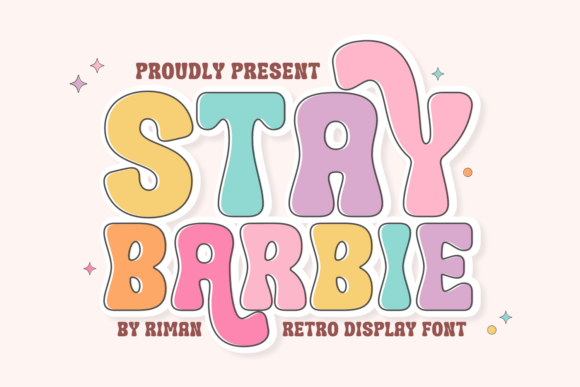
Immersing your designs in a vibrant, whimsical, and retro-tinted aura requires more than just selecting a decorative typeface; it demands an understanding of how vintage aesthetics function in modern layouts. Stay Barbie offers a delightfully inventive solution steeped in the funky groove of 70s typography, but its distinctive character means it cannot be treated like a standard sans-serif or serif font. Its generously stout curves, sleek corners, and spirited swashes render it the ideal option for creating captivating quotes, jazzy t-shirt designs, quirky stickers, dramatic posters, and dynamic branding. However, because this typeface carries so much visual weight and personality, designers often encounter usability hurdles that stem from treating it as a utility font rather than a display centerpiece.
Before integrating this font into your next project, it is essential to understand what Stay Barbie actually brings to the table. It encompasses uppercase, lowercase, numerals, punctuation symbols, and distinctive stylistic alternates, all masterfully crafted to lend artwork an extraordinary vintage sophistication. It is the quintessential choice for infusing creations with bold, jubilant vibes. Yet, the very features that make it special—its tight spacing and ornate details—are where most application errors occur. Avoiding these mistakes ensures your design communicates nostalgia effectively without sacrificing legibility or professional polish.
The Trap of Overlooking Stylistic Alternates
One of the most frequent oversights when using Stay Barbie is ignoring the included stylistic alternates. Many designers install the font, type out their headline using default glyphs, and assume the work is done. This approach misses the core value proposition of the typeface. The default characters are beautiful, but the alternate swashes and ligatures are where the true 70s authenticity lives. These alternates were designed to solve specific spacing issues and add organic flow that standard keyboard typing cannot replicate.
When you bypass these features, the text can appear stiff or mechanically spaced, undermining the "funky groove" aesthetic you are aiming for. In logo design or poster headers, this lack of customization can make the brand feel generic rather than bespoke. To correct this, always open the Glyphs panel in your design software (such as Illustrator, Photoshop, or Canva) before finalizing your layout. Test multiple variations of key letters, particularly capitals at the beginning of words and descenders at the end. Swapping a standard 'S' or 'R' for an extended swash version can instantly transform a flat composition into something dynamic and fluid. This small step separates amateur retro attempts from professional typographic compositions.
Misjudging Hierarchy and Readability
Stay Barbie is unapologetically loud. A common mistake is attempting to use it for body copy, subheads, or any text smaller than 24 points. Because the font features stout curves and intricate internal counters, reducing its size causes the negative space to collapse. On screen, this leads to pixelation or blurring; in print, ink bleed can fill in the delicate areas, turning distinct letters into indistinct blobs. This directly affects communication efficiency, as the viewer struggles to decode the message rather than absorbing it.
The better approach is to treat Stay Barbie strictly as a display font. Pair it with a clean, neutral sans-serif or a simple monospaced typeface that provides breathing room. Let Stay Barbie handle the emotional hook—the main title, the call to action, or the primary quote—and allow the supporting font to handle the informational heavy lifting. If you find yourself needing to use Stay Barbie for secondary information, reconsider the hierarchy. It is better to have a clear, readable layout with mixed typefaces than a cohesive but illegible wall of retro text. Remember that vintage sophistication relies on contrast; the boldness of Stay Barbie shines brightest when set against minimalist elements.
Navigating Licensing for Commercial Use
For entrepreneurs, freelancers, and small business owners, licensing is not merely a legal formality—it is a critical component of project viability. A significant misunderstanding involves assuming that purchasing a font automatically grants unlimited commercial rights. With highly stylized fonts like Stay Barbie, licenses often differentiate between personal use, desktop commercial use, web embedding, and merchandise production.
Using a personal license for a client’s t-shirt line or a monetized YouTube thumbnail can expose you to legal risks and additional costs later. Before downloading or buying, carefully review the End User License Agreement (EULA). Specifically check for clauses regarding:
- Merchandise Limits: Some licenses cap the number of physical units you can sell before requiring an extended license.
- Webfont Usage: Desktop licenses rarely include permission to embed the font on a website via CSS.
- Logo Trademarking: Verify if the license permits trademarking a logo created with the font, as some foundries restrict this to prevent exclusive ownership of their letterforms.
Clarifying these details upfront prevents costly rebranding efforts down the road. If your project scope might expand, investing in the appropriate commercial tier initially is far more cost-effective than retrofitting compliance later.
Technical Considerations for Print and Digital
The tactile quality of 70s typography was originally achieved through analog printing methods that naturally softened edges. In a digital environment, Stay Barbie’s vector paths are mathematically perfect, which can sometimes look too sterile or, conversely, too sharp for the intended retro vibe. Designers often fail to adjust the rendering based on the final medium, resulting in a disconnect between the nostalgic mood and the crisp execution.
For print projects like stickers or packaging, consult with your printer about minimum line weights. The spirited swashes may need to be slightly thickened to survive the die-cutting process. For digital applications, consider applying subtle texture overlays or slight blur effects to mimic vintage print imperfections. This post-processing step helps ground the font in reality, making it feel like a genuine artifact rather than a digital clip-art overlay. Additionally, always test your color choices against accessibility standards. Retro color palettes often feature low-contrast combinations (like mustard yellow on cream), which can render Stay Barbie’s complex shapes difficult to read for visually impaired audiences. Prioritizing contrast does not mean abandoning the aesthetic; it simply means choosing darker tones or lighter backgrounds to maintain the font’s integrity while ensuring inclusivity.
Evaluating Fit Before Commitment
Finally, avoid the impulse to choose Stay Barbie solely because it is trending. While it is a powerful tool, it dictates a specific tone that may not align with every retro-inspired project. Before making a decision, create a mockup using the actual text content you intend to display. Typefaces with strong personalities interact differently with various word lengths and letter combinations. A word that looks balanced in the preview specimen might have awkward spacing in your specific headline due to unique kerning pairs.
Test the font in context. Does the jubilant vibe match your brand voice, or does it feel forced? Is the vintage sophistication appropriate for your target demographic, or does it skew too youthful or too dated? By validating the practical application before purchase, you ensure that Stay Barbie serves as an asset to your design system rather than a decorative afterthought. When used with intention, technical awareness, and respect for its unique characteristics, this typeface becomes a transformative element that elevates your work from trendy to timeless.