Cameron: Capturing the Rugged Spirit of the Southwest in Modern Design
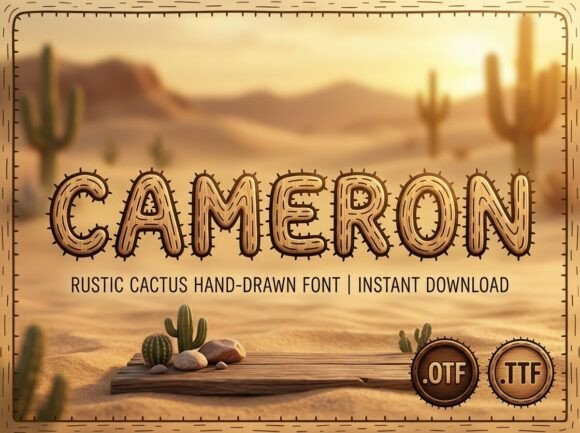
There is a specific texture to the American Southwest that is difficult to replicate digitally. It is found in the weathered grain of driftwood, the silhouette of saguaro cacti against a sunset, and the hand-painted signage of roadside trading posts. Cameron translates this tactile, rugged spirit into a digital format without losing its soul. As a rustic, hand-drawn display typeface, it moves beyond generic western fonts by incorporating organic wood grain textures and playful cactus spine details directly into chunky, rounded letterforms. For designers and brand owners, this isn't just a novelty font; it is a strategic tool for evoking authenticity in an era where consumers crave genuine connection.
Elevating Artisanal Food and Beverage Packaging
The craft food movement relies heavily on visual storytelling. When a customer picks up a bag of small-batch jerky or a jar of desert wildflower honey, the typography does as much heavy lifting as the ingredient list. Cameron excels in this space because its weight suggests substance and quality. The rounded, friendly letterforms avoid the aggressive masculinity often associated with outdoor brands, making it equally effective for spicy snacks, organic teas, or artisanal hot sauces.
Consider the shelf presence of a new beef jerky brand. Using a standard sans-serif might communicate cleanliness but lacks heritage. Conversely, an overly distressed vintage font can look dusty or outdated. Cameron strikes a modern-frontier balance. The integrated wood grain texture provides immediate visual interest at thumbnail size on e-commerce platforms, while the cactus spines add a layer of regional specificity that tells the consumer exactly where this product belongs. This typeface works best when paired with earthy color palettes—terracotta, sage green, and unbleached paper tones—to reinforce the natural positioning of the product.
Practical Application Tips for Packaging
- Contrast is Key: Because Cameron carries significant internal texture, pair it with clean, high-legibility body copy like a geometric sans-serif or a simple humanist serif. Let Cameron handle the flavor name or brand logo while a neutral font manages nutritional facts and descriptions.
- Scale Matters: The intricate details of the cactus spines and wood grain require adequate point size to remain crisp. Avoid using this typeface below 24pt in print applications, or the texture may turn to visual noise.
- Color Separation: If printing on kraft paper or textured stock, consider using Cameron in a single spot color or dark ink to let the substrate provide the base tone, enhancing the rustic aesthetic naturally.
Defining Independent Outdoor and Lifestyle Brands
For independent outdoor brands, the challenge is often distinguishing between "performance technical" and "lifestyle adventure." Cameron sits firmly in the lifestyle camp. It is ideal for brands focused on camping, glamping, van life, and slow travel rather than alpinism or competitive sports. The font’s personality is approachable and inviting, suggesting that the outdoors is a place of joy and comfort rather than just conquest.
This distinction is vital for merchandise design. T-shirts, enamel mugs, and canvas tote bags featuring Cameron feel like souvenirs from a cherished trip rather than corporate promotional gear. The hand-drawn nature of the glyphs implies human craftsmanship, which aligns perfectly with brands emphasizing sustainability, ethical manufacturing, or local production. When used on woven patches or embroidered caps, the chunky weight of the letterforms ensures the design remains readable even when stitched at smaller scales, maintaining brand recognition across various touchpoints.
Social Media Headers and Travel Vlogging Aesthetics
In the high-energy world of travel vlogging and content creation, consistency builds audience loyalty. Cameron serves as an excellent anchor for social media headers, YouTube thumbnails, and Instagram story templates. Its distinctive silhouette stops the scroll, offering a break from the sleek, minimalist aesthetics that dominate digital feeds. For creators focusing on national parks, desert road trips, or rustic cabin stays, this typeface acts as a visual shorthand for the content's vibe.
However, digital application requires careful consideration of screen resolution. While the texture looks beautiful in high-resolution print, it can sometimes compete with busy photography backgrounds common in travel content. To mitigate this, use solid color blocks or semi-transparent overlays behind the text to ensure legibility. The friendly weight of Cameron also makes it highly effective for kinetic typography in video intros, where the rounded forms animate smoothly and maintain their character even during quick transitions.
Nursery Decor and Family-Friendly Western Themes
An unexpected but highly effective use case for Cameron is in children’s decor and nursery design. The "desert nursery" trend has moved away from sterile pastels toward warm, nature-inspired themes featuring coyotes, cacti, and sunsets. Many western fonts are too sharp or serious for a child’s space, but Cameron’s rounded terminals and playful proportions make it inherently gentle.
This duality allows it to bridge the gap between adult design sensibilities and child-appropriate whimsy. It works beautifully for wall decals, personalized wooden name signs, and illustrated storybooks. The organic texture adds warmth to digital prints, preventing them from looking flat or mass-produced. For parents and designers creating spaces that grow with the child, Cameron offers a sophistication that avoids being overly juvenile, ensuring the decor remains relevant well beyond the toddler years.
Navigating Limitations and Best Practices
While versatile, Cameron is a specialized instrument. Understanding its limitations prevents design missteps. As a display typeface, it is strictly for headlines, logos, and short phrases. Attempting to set paragraphs or long-form content in Cameron will result in poor readability and visual fatigue due to the heavy texture and decorative elements.
Additionally, consider the cultural context. The Southwest aesthetic carries specific cultural weight. When using Cameron, ensure the surrounding imagery and messaging respect the region's heritage. Pairing this font with stereotypical or caricatured visuals can undermine the authentic craftsmanship the typeface seeks to embody. Instead, lean into contemporary interpretations of western design that honor the landscape and its people through thoughtful, modern composition.
Finally, be mindful of licensing and technical compatibility. Hand-drawn fonts with complex textures often have larger file sizes and may include extensive OpenType features. Always test the font in your specific workflow before finalizing a project. Check how the ligatures and alternates behave in your design software, as these features can enhance the hand-lettered illusion or create awkward spacing if ignored. By treating Cameron as a collaborative partner in the design process rather than a simple text input, you unlock its full potential to bring the warmth and rugged beauty of the desert to life.