Ezra Raccoon: Playful Display Font for Creative Projects
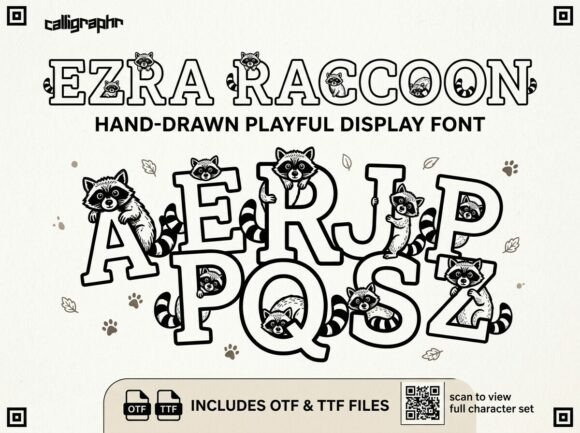
Typography often serves as the silent foundation of design, but occasionally a typeface steps forward to become an active participant in the storytelling. Ezra Raccoon is one such typeface. It is not merely a collection of letterforms; it is a collaborative illustration system that invites a band of mischievous friends directly into your layout. This hand-drawn display font radiates charm and curiosity, merging bold, clean-lined slab-serif structures with detailed raccoon illustrations that interact physically with the glyphs. For designers and creators seeking to inject personality without sacrificing legibility, Ezra offers a unique solution that bridges the gap between custom lettering and narrative illustration.
The Anatomy of Interactive Typography
What distinguishes Ezra from standard decorative fonts is the intentional relationship between the text and the image. In many novelty fonts, illustrations are tacked onto letters as afterthoughts or replace characters entirely, hindering readability. Ezra takes a different approach. The raccoons hide behind stems, peek through counters, and wrap their striped tails around the serifs. The letterforms remain robust and clear, functioning as proper slab-serifs suitable for headlines, while the wildlife elements add a layer of depth and motion.
This integration creates a sense of scale and environment. When you set a word in Ezra, you are not just arranging shapes; you are creating a micro-habitat. The high-impact illustrative silhouettes provide visual weight that anchors the composition, making it ideal for contexts where you need to capture attention quickly. The "backyard-explorer" energy feels authentic rather than manufactured, appealing to audiences who value organic aesthetics and handcrafted details over polished, corporate sterility.
Building Independent Toy Brand Identities
For entrepreneurs in the independent toy market, packaging and branding must communicate safety, fun, and imagination simultaneously. Ezra Raccoon serves as an excellent primary logotype or packaging headline for this niche. The slab-serif construction suggests durability and stability—essential subconscious cues for parents evaluating toys—while the raccoon motifs signal playfulness and connection to nature.
Consider how this typeface functions on a shelf. Amidst a sea of bright plastics and digital-looking sans-serifs, the textured, hand-drawn quality of Ezra stands out as something tactile and grounded. It pairs exceptionally well with uncoated paper stocks, kraft packaging, and earth-tone color palettes. When designing for this audience, use Ezra at large sizes to allow the intricate interactions between the animals and the letters to be visible. At smaller sizes, the details may merge, so reserve this typeface for hero elements like box fronts, hang tags, and brand signatures rather than body copy or technical specifications.
Nursery Decor and Environmental Graphics
Children’s spaces benefit from typography that feels approachable rather than academic. In nursery decor, wall decals, and growth charts, Ezra transforms functional text into art. Because the font features distinct character interactions, each letter can almost stand alone as a vignette. This modularity allows for creative spacing and arrangement that mimics the randomness of nature.
When applying Ezra to environmental graphics, consider the viewing distance. For wall art viewed from across a room, the bold silhouette of the raccoons ensures the theme reads instantly. Up close, the hand-drawn line work rewards inspection. This dual-layer engagement makes it perfect for educational posters or alphabet prints where the goal is to sustain a child's interest. To maintain clarity in these applications, avoid tight tracking. Give the raccoons room to breathe; overcrowding the letters will obscure the very details that make the font special.
Title Treatment for Children’s Literature
Book covers have milliseconds to convey genre and tone. For picture books, middle-grade adventures, and nature-themed stories, Ezra acts as an immediate visual hook. The font carries enough illustrative information that it can sometimes reduce the need for additional spot art around the title, allowing the cover illustration to take center stage elsewhere.
Editors and self-published authors should view Ezra as a collaborative partner in cover design. If your story features woodland creatures, forest settings, or curious protagonists, the typeface reinforces the narrative before the reader even opens the book. However, restraint is necessary. Because Ezra is visually dense, it works best when paired with ample negative space or simple, solid-color backgrounds. Avoid placing it over busy photographic textures or complex illustrations, as the competing details will reduce legibility. Let the typeface be the primary graphic element in the title zone.
Social Media Headers for Nature Vloggers
Digital creators face the challenge of establishing a recognizable brand within constrained aspect ratios. For nature vloggers, outdoor educators, and homesteading influencers, Ezra provides a cohesive header solution for YouTube, Twitch, and podcast platforms. The horizontal orientation of most social headers aligns perfectly with the way Ezra’s connecting tails and interacting elements flow across a line of text.
In the digital context, contrast is paramount. Use Ezra in white against dark forest greens, charcoal, or deep browns to maximize the silhouette effect. Since screens vary in resolution, test your header at mobile size to ensure the raccoon details don't turn into visual noise. This font also animates beautifully for video intros. Simple motion graphics where the raccoons pop out from behind the letters or tails uncurl can create a signature opening sequence that strengthens viewer retention and brand recall.
Practical Guidelines for Effective Implementation
To get the most out of Ezra Raccoon without compromising professional results, adhere to a few functional best practices. This is a display font with strong opinions; it requires specific handling to remain effective.
- Mind the Hierarchy: Never use Ezra for body text, captions, or subheads. Its complexity demands attention and will fatigue readers if used for extended passages. Pair it with a clean, neutral sans-serif or a simple geometric serif for supporting text to create balance.
- Respect the Kerning: The illustrations are designed with specific spatial relationships in mind. While minor optical adjustments may be necessary, drastically tightening the tracking will cause the raccoons to collide awkwardly. Trust the built-in spacing as your baseline.
- Color Strategy: Monochromatic treatments often yield the strongest results because they emphasize form over decoration. If using multiple colors, assign one color to the letterforms and another to the illustrations to help the eye distinguish between reading and viewing.
- Contextual Relevance: Ensure the whimsical, backyard aesthetic aligns with your project’s tone. Ezra is charming and curious, but it is not formal, luxurious, or technological. Using it in the wrong context can create cognitive dissonance that undermines the message.
Cultivating Curiosity Through Design Choices
Ultimately, choosing Ezra Raccoon is a decision to prioritize emotion and narrative alongside function. It challenges the designer to think about text as a living ecosystem rather than static data. Whether you are launching an indie toy line, designing a learning space, publishing a children's book, or growing a nature-focused channel, this typeface offers a shortcut to authenticity.
The value lies in its ability to do two jobs at once: communicating information and setting a mood. By understanding its strengths and respecting its limitations, you can leverage Ezra to create work that feels both professionally crafted and delightfully human. In a digital landscape saturated with generic assets, inviting a band of mischievous raccoons into your project is a strategic move toward distinctiveness. It signals to your audience that you care about the details, and that there is something worth exploring just beneath the surface of the letterforms.