Gluta: Enter the Grid with a Razor-Sharp Digital Typeface
In the rapidly evolving landscape of digital design, typography serves as the primary interface between brand identity and audience perception. For creators navigating the intersections of technology, gaming, and futuristic aesthetics, standard geometric sans-serifs often lack the necessary narrative weight. Gluta emerges as a distinct solution to this visual gap, offering a razor-sharp digital typeface that captures a cybernetic-and-geometric soul. This is not merely a font; it is a graphic system designed for environments where precision, authority, and high-tech personality are paramount.
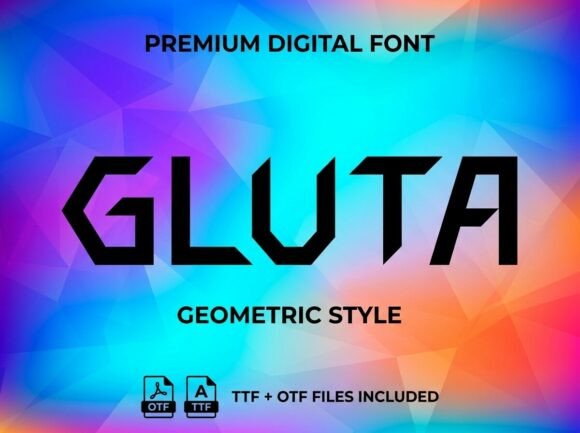
Enter the grid with Gluta, a typeface defined by bold, ultra-modern letterforms characterized by rhythmic, 45-degree angles and technical stencil-style cuts. These features do more than decorate text; they evoke the structured intensity of a futuristic command center. As digital spaces become increasingly saturated, the demand for typefaces that carry heavy graphic weight without sacrificing legibility has grown. Gluta answers this call, positioning itself as the premier choice for independent esports branding, cyber-security logos, hardware technology startups, and high-impact neon-and-networked social media headers.
The Evolution of Technical Aesthetics in Modern Branding
To understand why Gluta resonates so effectively today, one must look at the trajectory of tech-inspired design. For years, the technology sector favored minimalist, rounded, or overly clean sans-serif fonts intended to convey approachability and seamless user experience. While effective for consumer apps, this trend left a void in sectors that require a display of raw power, infrastructure, and competitive edge. The current market shift sees a return to "hard" aesthetics—visual languages that acknowledge the machinery, code, and networks underlying our digital lives.
Gluta fits precisely into this resurgence. It moves beyond the soft curves of Web 2.0 and embraces a modular, constructed appearance. The 45-degree angles are not arbitrary; they mirror the chamfered edges of industrial hardware, the geometry of circuit board traces, and the angular HUDs (Heads-Up Displays) found in modern simulation games. This alignment with physical and virtual engineering makes the typeface feel native to tech-forward audiences. It signals that a brand understands the architecture of its field, whether that field is network security or competitive gaming.
Rhythmic Geometry and Stencil Construction
The defining characteristic of Gluta is its adherence to a strict geometric grid while maintaining a dynamic rhythm. Unlike static block fonts, the rhythmic repetition of angled cuts creates a sense of forward momentum. This is crucial for digital headers and logos where the goal is to suggest speed, processing power, or active engagement. The technical stencil-style cuts serve a dual purpose: aesthetically, they reinforce the industrial vibe; functionally, they break up dense ink areas, improving readability on illuminated screens and preventing visual fatigue during extended viewing sessions.
This construction method also offers practical versatility. The stencil gaps allow Gluta to be layered over complex backgrounds—such as server rack photography, neon cityscapes, or abstract data visualizations—without losing its form. The negative space within the letterforms interacts with the background content, creating a cohesive composite image rather than a flat overlay. For designers working with video content or animated web elements, this interplay provides built-in opportunities for motion graphics and reveal effects.
Strategic Applications Across High-Tech Verticals
While versatile, Gluta excels in specific niches where its high-tech personality aligns with industry expectations. Understanding these applications helps professionals leverage the typeface effectively without forcing it into unsuitable contexts.
- Independent Esports Branding: The esports ecosystem thrives on aggressive, memorable visual identities. Teams and streamers need logos that read instantly at small sizes on tournament overlays and massively on arena screens. Gluta’s heavy graphic weight ensures visibility, while its angularity conveys the competitive sharpness required in gaming culture.
- Cyber-Security and InfoSec: Trust in security is often communicated through visuals of fortification and precision. The command-center aesthetic of Gluta suggests vigilance and structural integrity. It avoids the playful nature of consumer tech, opting instead for a serious, fortified appearance that reassures enterprise clients.
- Hardware Technology Startups: For companies building physical tech—from custom mechanical keyboards to drone components—the typography must reflect the product's build quality. Gluta mirrors the CNC-machined aluminum and PCB layouts of the hardware itself, creating brand consistency from packaging to website.
- Neon-and-Networked Social Media: In the attention economy, headers and thumbnails must arrest the scroll. Gluta’s bold forms hold their own against vibrant neon color palettes and dark mode interfaces common in tech influencer content. Its distinctive silhouette remains recognizable even when compressed for mobile feeds.
Navigating Legibility and Hierarchy
A typeface with such strong personality requires disciplined application. Gluta is primarily a display font, optimized for headlines, logos, and short-form callouts. Its intricate stencil details and heavy weight make it less suitable for long-form body copy. Designers should pair Gluta with a neutral, highly legible sans-serif or monospace font for supporting text. This contrast amplifies Gluta’s impact while ensuring the overall layout remains accessible and functional.
Hierarchy is established through scale and spacing. Because the letterforms are inherently bold, tight tracking can sometimes cause the stencil cuts to close up visually, especially at smaller sizes. Generous tracking often enhances the technical feel, allowing each character to breathe and reinforcing the modular grid structure. When using Gluta for all-caps settings—which is its most natural state—careful attention to line height prevents the dense blocks of text from feeling oppressive. The goal is to channel the energy of a control panel, not a wall of noise.
Meeting User Expectations in a Digital-First Era
Modern audiences, particularly those aged 20–50 who have grown up alongside rapid technological advancement, possess sophisticated visual literacy. They can distinguish between genuine technical aesthetics and superficial decoration. Gluta succeeds because its design logic is consistent. The 45-degree angles are applied systematically, not randomly. The stencil breaks follow a logical pattern. This internal consistency satisfies the user’s subconscious desire for order and reliability.
Furthermore, as remote work and digital collaboration become permanent fixtures, the "command center" aesthetic has transcended niche subcultures to influence mainstream professional presentation. Video conferencing backgrounds, digital business cards, and personal portfolio sites increasingly adopt darker themes and sharper graphics to convey professionalism in a virtual setting. Gluta bridges the gap between enthusiast passion and professional competence, making it appropriate for a freelance developer’s portfolio as well as a corporate cybersecurity firm’s landing page.
Future-Proofing Visual Identity
Trends cycle quickly, but structural design principles endure. While the specific association with "cyberpunk" may ebb and flow, the appreciation for clarity, modularity, and technical precision in digital interfaces is likely to persist. By anchoring a brand in these fundamental qualities, Gluta offers longevity. It avoids the pitfalls of hyper-stylized novelty fonts that date themselves within months. Instead, it functions as a robust tool for communication.
For businesses and creators, adopting Gluta is a strategic decision to signal alignment with innovation. It tells the viewer that the entity behind the text values engineering, performance, and modern standards. Whether used for a Twitch banner, a SaaS product launch, or an educational course on network architecture, the typeface performs the heavy lifting of establishing tone before a single word is read. In an era where digital presence is synonymous with existence, entering the grid with Gluta provides a foundational advantage in capturing and retaining attention.
Ultimately, the relevance of Gluta lies in its ability to translate complex technological concepts into immediate visual impact. It respects the intelligence of its audience by avoiding cliché, offering instead a refined, geometric vocabulary for the digital age. For professionals seeking to elevate their visual communication, understanding and utilizing this typeface is not just an aesthetic choice—it is a functional adaptation to the demands of modern digital storytelling.