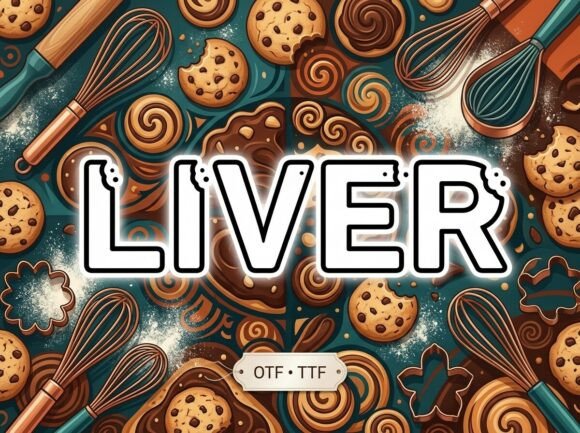
Liver: Elevating Culinary Branding with a Snackable Display Typeface
In the competitive landscape of food and beverage marketing, visual identity serves as the first point of sensory engagement. Before a customer tastes a product or reads a menu, they consume the brand aesthetically. For independent bakeries, artisanal confectioners, and culinary content creators, standard typography often fails to convey the tactile warmth and organic imperfection of handmade goods. Enter Liver, a distinctive display font that bridges the gap between digital design and physical texture. By integrating rhythmic bite marks and crumbling edges into bold, rounded sans-serif letterforms, Liver offers a typographic solution specifically engineered for the gastronomic sector. This typeface does not merely spell out words; it evokes the visceral experience of eating, making it an essential tool for designers aiming to satisfy both aesthetic standards and appetite appeal.
The Psychology of Edible Typography
To understand the efficacy of Liver in commercial applications, one must first recognize the psychological connection between shape and taste. Research in multisensory perception suggests that rounded shapes are cognitively associated with sweetness and creaminess, while angular forms correlate with bitterness or carbonation. Liver leverages this phenomenon through its heavy structural weight and soft geometry. However, unlike generic rounded fonts that can appear sterile or overly juvenile, Liver introduces controlled irregularity.
The "bite marks" and eroded textures function as visual cues for freshness and human intervention. In an era dominated by AI-generated perfection and minimalist corporate aesthetics, these intentional flaws signal authenticity. When a consumer sees a header rendered in Liver, the brain processes the crumbling edges similarly to how it processes the crust of a freshly baked cookie. This subconscious association reduces the cognitive load required to understand the brand's value proposition. The font acts as a semantic shortcut, communicating "homemade," "delicious," and "approachable" without requiring explicit copy. For businesses relying on impulse purchases and emotional connections, this typographic empathy is a measurable asset.
Strategic Applications Across Culinary Verticals
Versatility within a niche is what separates a novelty font from a professional design asset. While Liver possesses a strong personality, its utility extends across various touchpoints in the food industry. Understanding where and how to deploy this typeface ensures maximum impact without compromising legibility or brand integrity.
- Independent Bakery Signage: Physical storefronts benefit immensely from Liver’s high contrast and bold presence. On window decals or chalkboard menus, the textured edges mimic the flour-dusted surfaces common in baking environments. The font’s weight ensures readability from a distance, while the playful details invite closer inspection.
- Confectionery Packaging: Shelf appeal relies on differentiation. In a sea of clean, modernist candy wrappers, packaging utilizing Liver stands out through tactile suggestion. The font pairs exceptionally well with matte finishes and uncoated papers, enhancing the illusion of organic texture. It is particularly effective for shortbread, cookies, granola, and rustic pastries where the product itself mirrors the typography.
- Culinary Blog Headers: Digital content creators face the challenge of stopping the scroll. Standard serif or sans-serif headers often blend into the background noise of social feeds. Liver provides immediate context, signaling to readers that the content is recipe-focused and lifestyle-oriented. Its unique silhouette creates memorable branding for site logos and Pinterest pins.
- Social Media Assets: Platforms like Instagram and TikTok prioritize visual engagement. Using Liver for quote cards, recipe titles, or promotional announcements adds a layer of dynamism. The font’s inherent energy matches the fast-paced, visually rich nature of food content, increasing dwell time and interaction rates.
Technical Considerations for Implementation
Despite its decorative nature, Liver requires thoughtful implementation to maintain professional standards. Display fonts with complex textures present specific technical challenges that differ from standard body text. Designers and business owners must navigate spacing, scaling, and pairing to ensure the final output remains functional as well as attractive.
Scale is the primary variable affecting texture fidelity. Because Liver’s character lies in its micro-details—the crumbs and bites—using the font at small sizes can result in visual muddiness. At 12pt or below, the intricate edges may blur or pixelate, especially in digital formats. This typeface demands space to breathe. It performs optimally at headline sizes (48pt and above) where the negative space within the bite marks remains distinct. For smaller subheads or captions, designers should transition to a complementary, cleaner sans-serif to preserve hierarchy and readability.
Kerning and tracking also require adjustment. The irregular outlines of Liver mean that automatic spacing algorithms often fail. Manual optical kerning is frequently necessary to prevent awkward gaps or unintended collisions between characters. The goal is to maintain a consistent visual rhythm despite the asymmetrical letterforms. Tighter tracking can enhance the cohesive, dough-like feel of a wordmark, while looser tracking may emphasize individual letter shapes. Testing across multiple mediums—from large format print to mobile screens—is mandatory to verify that the texture translates effectively at every intended size.
Pairing Strategies for Balanced Layouts
A display font as expressive as Liver cannot carry an entire layout alone. Successful design relies on contrast. Pairing Liver with appropriate secondary typefaces prevents visual fatigue and establishes clear information architecture. The objective is to let Liver serve as the attention-grabbing anchor while supporting fonts handle the heavy lifting of communication.
Geometric sans-serifs are often the safest pairing choice. Their mathematical precision contrasts beautifully with Liver’s organic chaos. Fonts like Montserrat, Futura, or Century Gothic provide a stable foundation that grounds the playfulness of the display face. This combination works well for modern bakeries that want to appear artisanal yet hygienic and professional. Alternatively, for brands leaning into heritage or nostalgia, a neutral serif like Merriweather or Lora can add a layer of traditional credibility. The key is to avoid pairing Liver with other textured or handwritten fonts, which creates competition rather than harmony. The secondary font should always recede, allowing Liver to remain the singular focal point.
Navigating Tone and Audience Alignment
While Liver is undeniably charming, it is not universally applicable. Recognizing when not to use this typeface is as important as knowing when to use it. The font carries a specific tone: informal, indulgent, and youthful. This makes it ideal for cookies, donuts, casual dining, and family-oriented food content. However, it may be dissonant for luxury chocolatiers, fine dining establishments, or health-focused clinical nutrition brands.
For high-end patisseries where elegance and precision are paramount, the crumbling edges of Liver might suggest messiness rather than craftsmanship. Similarly, in medical or dietary contexts, the snackable aesthetic could undermine messages of scientific rigor or health optimization. Designers must evaluate the brand’s core values against the font’s inherent personality. If the brand promise is refinement, exclusivity, or sterility, Liver is likely a mismatch. Conversely, if the brand celebrates comfort, tradition, and sensory pleasure, Liver becomes a powerful amplifier of those attributes.
Accessibility must also factor into the decision-making process. While display fonts are generally exempt from strict WCAG body text guidelines, legibility remains a priority. Users with dyslexia or visual impairments may struggle with highly textured letterforms. Ensuring sufficient color contrast between Liver and its background is non-negotiable. Additionally, providing alternative text descriptions for images containing Liver typography helps screen reader users access the content. Responsible design means balancing aesthetic expression with inclusive communication practices.
The Role of Texture in Modern Food Marketing
The rise of fonts like Liver reflects a broader shift in design trends toward neo-organicism. After years of flat design and corporate minimalism, audiences are craving sensory richness. This trend extends beyond typography into photography styles, packaging materials, and web interactions. Consumers are seeking digital experiences that feel tangible. Liver satisfies this craving by digitizing the physical properties of food.
This alignment with current cultural preferences gives brands using Liver a temporal advantage. It positions them as contemporary and culturally aware, rather than stuck in outdated design paradigms. However, because trend cycles move quickly, smart implementation focuses on timelessness within the niche. By anchoring Liver in classic bakery traditions rather than fleeting internet memes, brands can extend the font’s relevance. The connection to cookies and baked goods is perennial; the specific stylistic execution may evolve, but the fundamental appetite appeal remains constant.
Ultimately, selecting a typeface is a strategic business decision. Liver offers more than decorative flair; it provides a specialized vocabulary for communicating deliciousness. For professionals in the culinary space, mastering this tool means understanding the intersection of form, flavor, and function. When applied with intention and technical care, Liver transforms ordinary text into an invitation, turning passive viewers into hungry customers. It demonstrates that in the world of food design, typography is not just something you read—it is something you can almost taste.