Heavy Warning: Adding Authentic Impact to Bold Design Projects
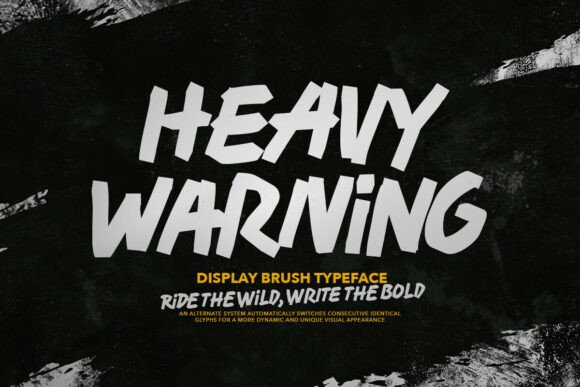
There is a distinct difference between text that simply occupies space and typography that commands attention. In a digital landscape saturated with clean sans-serifs and predictable geometric shapes, finding a typeface that feels genuinely human yet undeniably powerful is a challenge for many designers and content creators. Heavy Warning fills this specific niche as a bold, handwritten brush font that refuses to look sterile. Unlike standard display fonts where every letter is identical, this typeface brings the chaotic energy of real ink on paper to your digital canvas. It is designed for moments when you need to shout without screaming, offering a visual weight that feels organic rather than manufactured.
The Mechanics of Natural Handwritten Flow
The primary struggle with using brush fonts in professional design is the "stamped" effect. When you type a word in all caps or repeat a common letter, traditional fonts show their artificial nature through perfect repetition. Heavy Warning solves this through intelligent glyph variation. The font includes distinctly different shapes for uppercase and lowercase characters, allowing you to mix them randomly to mimic the inconsistency of actual handwriting. This isn't just an aesthetic choice; it is a functional necessity for maintaining believability in larger text blocks.
For those working in modern design software like Adobe Illustrator, Photoshop, Canva, or Affinity Designer, the true potential of this font unlocks when you activate contextual alternates. Instead of manually swapping glyphs to avoid repetition, the font automatically cycles between variations based on the surrounding letters. This feature transforms a static string of text into a fluid, dynamic composition. If you are designing a quote card for Instagram or a headline for a blog post, this automation saves hours of manual kerning and adjustment while ensuring the final result looks like it was penned by a confident hand rather than generated by a computer.
Strategic Applications in Branding and Marketing
Entrepreneurs and small business owners often face the dilemma of wanting to appear established yet approachable. A rigid corporate font can feel cold, while a delicate script might lack authority. Heavy Warning sits comfortably in the middle ground, making it an excellent candidate for brands that rely on personality and authenticity. Consider a craft brewery launching a new IPA or a fitness coach promoting a high-intensity workshop. In both scenarios, the audience responds to raw energy. Using this font for product labels, event posters, or social media announcements communicates strength and urgency without sacrificing the artisanal touch that consumers currently value.
Marketers can also leverage this typeface for conversion-focused assets. Call-to-action buttons and promotional banners often suffer from banner blindness because they blend into the background noise of the internet. A bold brush texture creates immediate visual contrast against flat web backgrounds. However, the key is restraint. Because Heavy Warning carries so much visual weight, it works best as a singular focal point. Pairing it with a simple, legible sans-serif for body copy ensures your message remains accessible while the headline does the heavy lifting of grabbing attention.
Educational and Personal Expression Use Cases
Beyond commercial applications, educators and hobbyists find immense utility in expressive typography. Teachers creating classroom decor, motivational posters, or worksheet headers can use Heavy Warning to make learning materials feel less bureaucratic and more engaging. For students and young adults, the font’s aggressive yet playful style resonates with contemporary street art and zine culture. It is particularly effective for personal projects like bullet journaling covers, DIY apparel design, or stickers. The multi-language support further expands its utility, allowing non-English speakers to maintain stylistic consistency across bilingual projects or language learning resources without switching to a mismatched fallback font.
Practical Considerations Before Implementation
While the aesthetic appeal of Heavy Warning is evident, successful implementation requires understanding its technical and visual boundaries. Before downloading or purchasing, consider the hierarchy of your project. This is not a body text font. Attempting to use it for paragraphs or long-form captions will result in poor readability and visual fatigue. Reserve it for headlines, logos, short quotes, and emphasis elements. If your design requires extensive reading, ensure you have a complementary typeface ready to handle the informational load.
You should also evaluate the medium of delivery. Brush fonts with rough edges can sometimes lose definition at very small sizes or in low-resolution formats. Test the font at your intended output size before finalizing your design. What looks textured and beautiful on a 27-inch monitor might turn into muddy blobs on a mobile screen or a cheap printout. Additionally, verify that your software supports OpenType features if you plan to rely on contextual alternates. While basic usage works everywhere, the automatic variation features require compatible applications to function correctly.
- Licensing Verification: Always check whether your license covers commercial use, especially if you are creating merchandise, client work, or monetized content. Personal licenses rarely cover business branding.
- Contrast Ratios: Bold brush strokes can be dense. Ensure there is sufficient color contrast between the text and background to meet accessibility standards, particularly for web and digital signage.
- Spacing Adjustments: Handwritten fonts often have irregular side bearings. Be prepared to adjust tracking or kerning manually for specific words to prevent awkward gaps or collisions that the automated alternates didn't catch.
- Contextual Appropriateness: Assess whether the "warning" aesthetic aligns with your tone. While versatile, it implies intensity. It may not suit luxury spa branding or somber memorial services despite its beauty.
Achieving Authentic Outcomes Through Typography
Ultimately, choosing Heavy Warning is about signaling intent. It tells the viewer that the content was crafted with passion and confidence. For freelancers building portfolios, using such a distinctive typeface demonstrates an understanding of current design trends and typographic nuance. For bloggers and influencers, it helps establish a recognizable visual voice that separates their content from generic templates. The font’s ability to bridge the gap between digital precision and analog warmth makes it a valuable asset in any creative toolkit.
When applied thoughtfully, the varying uppercase and lowercase forms create a rhythm that guides the eye naturally across the composition. This subtle movement keeps viewers engaged longer than static text would. Whether you are selling a product, teaching a concept, or expressing a personal truth, the typography you choose acts as the tone of voice for your visual message. Heavy Warning provides the vocal range needed to deliver that message with conviction, ensuring that your work doesn't just get seen, but actually gets felt. By respecting its limitations and leveraging its unique OpenType capabilities, you transform a simple font file into a cornerstone of effective visual communication.