Junco: Evaluating a Fluid Display Typeface for Expressive Branding
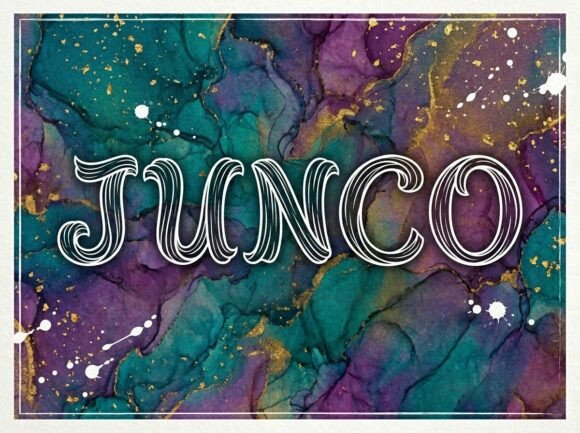
In the crowded landscape of display typography, finding a typeface that balances artistic expression with functional legibility is a persistent challenge for designers and brand strategists. Junco emerges as a distinct solution within this niche, positioning itself as an expressive display typeface designed to capture a fluid and graceful aesthetic. Unlike standard sans-serifs or traditional serifs that prioritize uniformity, Junco is constructed from flowing, ribbon-like paths and intricate line work. This structural approach suggests continuous motion, making it a specialized tool for projects requiring a poetic personality and rhythmic visual weight.
For professionals evaluating type assets, the primary question is rarely just about aesthetics; it is about application and return on investment. Junco is not a universal workhorse intended for body copy or interface design. Instead, it serves a specific strategic purpose: establishing immediate emotional resonance in high-impact environments. Its value lies in its ability to function as a primary visual anchor for independent creative agencies, artisanal product packaging, modern dance events, and sophisticated social media branding. Understanding its technical construction and practical limitations is essential for determining whether it aligns with your current project requirements.
Structural Characteristics and Visual Rhythm
The defining characteristic of Junco is its commitment to the illusion of continuous movement. The letterforms are not merely drawn; they appear to be formed by a single, unbroken gesture. This ribbon-like construction creates a unique texture that differs significantly from standard vector outlines. When set at large sizes, the interplay between positive and negative space generates a rhythm that guides the viewer’s eye across the composition. This is particularly effective in horizontal layouts where the goal is to lead the audience through a narrative sequence rather than presenting static information.
The "bold" nature of Junco refers less to stroke width and more to its artistic confidence. The typeface occupies space assertively without feeling heavy or blocky. This distinction is crucial for luxury and artisanal markets where heaviness can imply industrial mass production, while lightness can sometimes lack authority. Junco navigates this middle ground by using intricate line work to create density. The result is a typographic voice that feels handcrafted yet precise, suggesting human touch backed by professional execution. For designers accustomed to adjusting tracking and leading extensively, Junco requires a different approach; its inherent rhythm dictates spacing, and forcing it into rigid grids can sometimes undermine its organic flow.
Practical Applications in Brand Identity
Evaluating Junco requires looking at specific use cases where its strengths translate into tangible business value. It excels in contexts where the brand promise involves creativity, movement, or sensory experience.
- Independent Creative Agencies: For studios and freelancers, the choice of typeface signals internal culture. Junco communicates a departure from corporate rigidity, suggesting a workflow that values intuition and bespoke solutions. It works effectively in logo lockups and website headers where the agency needs to differentiate itself from competitors using safe, geometric sans-serifs.
- Artisanal Perfume and Cosmetic Packaging: In this sector, typography must evoke scent and texture before the product is even opened. The fluid lines of Junco mirror the liquid nature of perfumes and oils. Its sophistication allows it to sit comfortably alongside minimalist photography and textured paper stocks without competing for attention. It provides the necessary "poetic personality" that transforms a commodity into an experience.
- Modern Dance and Performance Arts: Static type often fails to represent kinetic art. Junco’s suggestion of continuous motion makes it uniquely suited for event logos, posters, and programs related to dance, theater, and performance. It visually echoes the subject matter, creating a cohesive identity system that feels authentic to the art form.
- Social Media Headers and Digital Assets: On platforms like Instagram and LinkedIn, header images have limited vertical real estate but require high impact. Junco’s bold, rhythmic forms remain legible even when cropped or viewed on mobile devices. Its distinctive silhouette helps brands maintain recognition in fast-scrolling feeds where generic typography blends into the background noise.
Technical Usability and Workflow Integration
From a production standpoint, Junco presents both advantages and considerations for the working designer. The meticulous construction of the ribbon paths implies high-quality vector data, which is essential for scaling from business cards to large-format environmental graphics. Poorly constructed display fonts often reveal jagged edges or awkward joins when enlarged; Junco’s emphasis on flowing paths suggests robust curve handling that withstands scrutiny in print and high-resolution digital formats.
However, users should be mindful of pairing strategies. Because Junco possesses such a strong, specific character, it demands a supportive cast of secondary typefaces. Pairing it with another decorative font usually results in visual chaos. The most effective combinations typically involve clean, neutral grotesques or refined transitional serifs that provide stability and readability for body text. Junco should handle the headlines, titles, and accent elements, while the supporting typeface manages information hierarchy and extended reading. This division of labor ensures that the expressive qualities of Junco enhance rather than hinder communication.
Licensing and flexibility also play a role in long-term value. For agencies managing multiple client identities, verifying that the license covers the intended scope of usage—from digital ads to physical merchandise—is a necessary due diligence step. While Junco offers significant stylistic value, ensuring it fits within the budgetary and legal parameters of a project is as important as its aesthetic fit.
Assessing Limitations and Constraints
No typeface is without limitations, and acknowledging them is part of a professional evaluation. Junco’s strength is also its constraint: it is highly stylized. This makes it unsuitable for projects requiring neutrality, extreme legibility at small sizes, or extensive data presentation. Financial reports, technical manuals, and dense editorial content will not benefit from Junco’s fluidity; in these contexts, its decorative elements would become obstacles to comprehension.
Furthermore, the "fluid-and-graceful soul" of the typeface carries specific cultural and emotional connotations. It leans towards femininity, softness, and organic movement. Brands aiming for aggressive, industrial, or strictly technological messaging may find a dissonance between Junco’s personality and their core values. It is vital to test the typeface against actual brand attributes and audience expectations before committing. A mood board or rapid prototyping phase can reveal whether the typeface’s inherent poetry aligns with the brand’s intended tone or inadvertently shifts the perception in an unwanted direction.
Strategic Value for Modern Creatives
Ultimately, the decision to adopt Junco should be driven by strategic intent rather than trend following. In an era where AI-generated imagery and template-based design are becoming ubiquitous, the demand for typography that feels intentionally crafted and human-centric is increasing. Junco answers this demand by offering a level of detail and rhythm that feels authored rather than generated.
For the target demographic of entrepreneurs, marketers, and creators aged 20 to 50, Junco represents a mature design choice. It avoids the irony of novelty fonts and the sterility of default system fonts. It sits in a productive middle ground where art meets commerce. Whether used to elevate a perfume label, define a dance festival’s identity, or distinguish a creative portfolio, it offers a reliable mechanism for conveying sophistication and flow.
When integrated thoughtfully, Junco does more than display text; it sets a tempo for the entire visual identity. It invites the viewer to slow down and trace the lines, creating a moment of engagement that purely utilitarian typography cannot achieve. For projects where that moment of connection is the primary metric of success, Junco proves to be a worthy and versatile asset. Professionals considering this typeface should view it not merely as a stylistic overlay, but as a foundational element of brand storytelling that requires respect for its rhythm and careful orchestration within the broader design system.