Lumina Inline: Modern Geometric Display Font
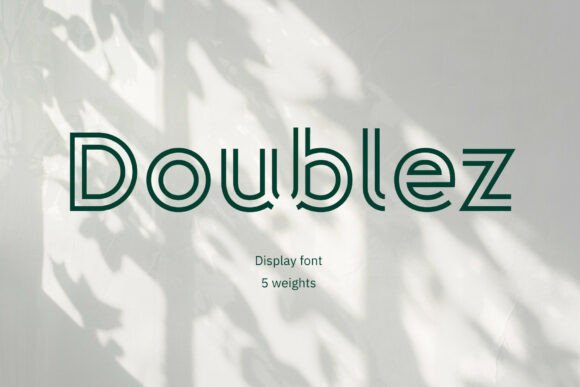
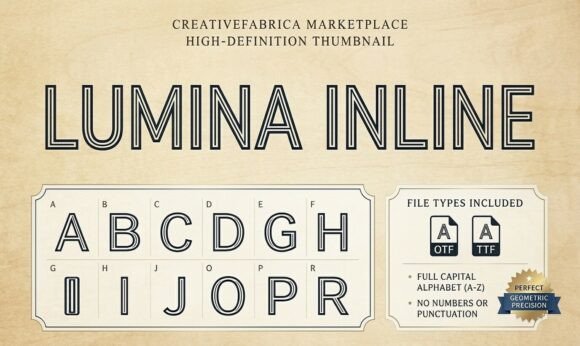
Typography often serves as the silent ambassador of a design, but occasionally a typeface steps forward to become the main event. Lumina Inline is one such font, offering a distinct visual rhythm that bridges the gap between retro nostalgia and futuristic minimalism. Defined by its clean, geometric sans-serif foundation and a precise double-line outline structure, this display font provides an immediate sense of sophistication without overwhelming the viewer. It is not merely a decorative element; it is a functional tool for creators who need to convey modernity, precision, and style in equal measure.
The true strength of Lumina Inline lies in its versatility. While many inline fonts suffer from poor legibility at smaller sizes or cluttered aesthetics when scaled up, this typeface maintains structural integrity across various applications. The negative space within the double lines creates a natural breathing room, making it exceptionally readable even in bold statements. For designers and marketers operating in saturated visual environments, this balance of ornamentation and clarity is essential. It allows the text to function as both copy and illustration, reducing the need for additional graphical elements while maintaining a high-impact aesthetic.
Elevating Brand Identity and Editorial Design
In the realm of branding and editorial layout, Lumina Inline excels at creating hierarchy and focal points. Its architectural quality makes it an ideal candidate for magazine headers, poster titles, and album covers where the goal is to arrest attention instantly. Unlike heavy solid block letters that can feel aggressive, the outlined nature of Lumina Inline feels open and inviting. This makes it particularly effective for lifestyle brands, tech startups, and cultural publications that want to project innovation without sacrificing approachability.
When integrating this font into brand systems, consider its role as a headline specialist. Pairing Lumina Inline with a neutral, solid sans-serif body copy creates a dynamic contrast that guides the reader’s eye naturally through the content. For example, a fashion editorial might use Lumina Inline for the cover line and section dividers, anchoring the page with a graphic quality that complements photography rather than competing with it. In logo design, the geometric consistency of the letterforms ensures that monograms remain balanced and proportional, providing a sleek container for brand initials that looks equally professional on a business card or a billboard.
Neon Aesthetics and Futuristic Graphics
The double-line construction of Lumina Inline was practically engineered for neon-style graphics and cyberpunk aesthetics. The inherent separation between the inner and outer strokes mimics the physical tubing of neon signage, allowing digital designers to achieve realistic lighting effects with minimal effort. When applying glow filters or gradient overlays in software like Photoshop or Illustrator, the inline gap prevents colors from bleeding together, preserving the definition of each character.
This application extends beyond static images into motion graphics and video content. For content creators producing YouTube thumbnails, stream overlays, or social media reels, Lumina Inline offers a built-in texture that adds production value. The font’s geometry aligns perfectly with grid-based layouts common in UI design and HUD (Heads-Up Display) interfaces. By utilizing the negative space within the letters, animators can create reveal effects where light travels through the channels of the typeface, reinforcing the futuristic theme organically. This practical utility transforms a simple text layer into a complex visual asset that supports narrative storytelling in sci-fi, gaming, and technology contexts.
Optimizing for Crafters and Vector Cutting Machines
Beyond digital screens, Lumina Inline has found a dedicated audience among crafters, SVG designers, and users of cutting machines like Cricut and Silhouette. Outline fonts are notoriously difficult to work with in vinyl and paper crafting because they often require tedious weeding or result in fragile connections. Lumina Inline addresses these pain points through intentional vector construction. The double lines are spaced sufficiently to allow for clean cuts, and the geometric curves minimize sharp angles that can tear delicate materials.
For makers creating custom apparel, tumblers, or home decor, this font offers a "drawn" look that simulates hand-lettering with mechanical precision. It is particularly effective for multi-layer projects where different colored vinyls can be stacked to create depth. Because the font is designed as a single compound shape rather than two separate overlapping fonts, alignment issues are virtually eliminated. This reliability saves time and material, making it a practical choice for small business owners fulfilling custom orders. Whether cutting adhesive vinyl for laptop stickers or using heat transfer vinyl for sporty apparel, the font retains its crisp edges and modern appeal after application.
Sporty Apparel and Merchandise Design
The intersection of geometry and athleticism makes Lumina Inline a strong contender for sportswear and merchandise. Traditional athletic typography tends toward heavy, italicized slabs, but modern sportswear branding increasingly embraces technical precision and lightweight performance aesthetics. Lumina Inline fits this niche by suggesting speed and engineering through its linear form. It works exceptionally well for jersey numbers, team names, and event signage where a contemporary edge is desired over vintage varsity styles.
Merchandise designers can leverage this font to create designs that feel premium rather than generic. On dark fabrics, the outline style allows the garment color to show through, creating a subtle integration between text and textile. This is especially useful for tonal designs where the print color matches the fabric, relying solely on the shadow or texture of the ink to define the letterforms. For entrepreneurs selling print-on-demand products, Lumina Inline provides a distinctive typographic voice that stands out in marketplace search results, signaling quality and thoughtful design to potential customers.
Practical Guidelines for Effective Implementation
To maximize the impact of Lumina Inline, designers must respect its specific optical characteristics. As a display font, it demands space. Cramping the tracking or reducing the size below a certain threshold will cause the inline details to disappear or vibrate visually. Always test the font at the intended output size before finalizing a design. If the double lines begin to merge, increase the point size or switch to a solid alternative for secondary information. Legibility should never be sacrificed for style; the font’s beauty is contingent on its clarity.
Color selection also plays a pivotal role in how this typeface performs. High-contrast combinations, such as white on black or neon on dark grey, emphasize the inline structure most effectively. Low-contrast pairings can cause the inner and outer lines to blend, negating the font’s primary feature. When using Lumina Inline in full-color environments, ensure that the background does not contain busy patterns that interfere with the delicate line work. Solid colors, smooth gradients, or blurred imagery provide the best canvas for the font’s geometric precision.
- Maintain Hierarchy: Reserve Lumina Inline for headlines, logos, and short phrases. Use simpler, solid typefaces for body text to prevent visual fatigue.
- Respect Negative Space: Allow ample padding around the text. The font’s intricate details need isolation to be appreciated fully.
- Test Across Media: Verify legibility in both RGB and CMYK color spaces, as well as in physical prototypes for cut files and embroidery.
- Avoid Distortion: Never stretch or skew the font horizontally or vertically. The geometric proportions are mathematically balanced and will look broken if altered non-uniformly.
Ultimately, Lumina Inline represents a thoughtful synthesis of form and function. It empowers designers, marketers, and makers to create work that feels current and intentional without relying on fleeting trends. By understanding its technical strengths and respecting its optical limits, creatives can harness this typeface to build visual identities that are as durable as they are striking. Whether illuminating a digital interface or adorning a handmade gift, Lumina Inline proves that modern typography can be both technically impressive and deeply expressive.