Michele Font: Bold Decorative Display Typography
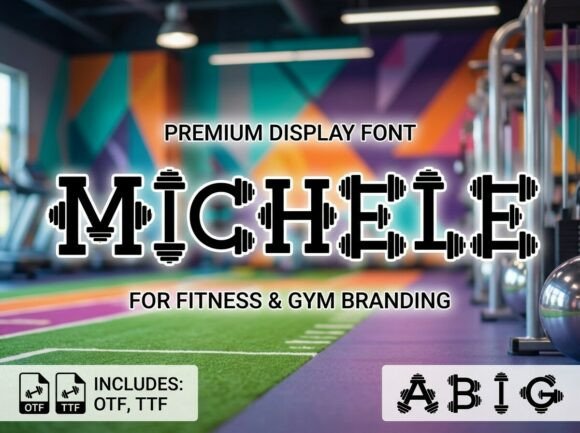
In the vast landscape of digital typography, finding a typeface that commands attention without sacrificing polish is a distinct challenge. Michele and This font emerges as a stunning decorative display option designed specifically to be the center of attention. Unlike utilitarian text fonts meant for long-form reading, this typeface carries a strong visual personality and unique artistic elements that transform standard lettering into graphic art. For creators looking to break away from ordinary design conventions, Michele offers a sophisticated yet bold aesthetic that elevates headlines, logos, and packaging.
Understanding the specific nature of this font is crucial before integrating it into your workflow. It is important to recognize that Michele is an all-caps uppercase-only display typeface. It does not include lowercase letters. This intentional design choice means every character is crafted as a standalone work of art, optimized for high-impact applications rather than body copy. Whether you are a seasoned art director or a small business owner designing your first product label, recognizing how this constraint influences your layout will determine the success of your project.
Diverse Applications Across Creative Disciplines
The value of a decorative font like Michele shifts depending on who is using it and what they aim to achieve. While the visual style remains consistent, the practical application varies significantly between professional designers, entrepreneurs, educators, and hobbyists.
For Professional Designers and Agencies
Experienced typographers and graphic designers often evaluate fonts based on technical flexibility and brand differentiation. For this group, Michele serves as a specialized tool for creating distinct visual hierarchies. Because the font features unique artistic elements, professionals can use it to anchor a brand identity system without needing additional illustration work. The availability of an OTF (OpenType Font) file is particularly relevant here. OpenType is the professional standard for advanced design software like Adobe Illustrator or InDesign, allowing for precise kerning, tracking, and layout control. Designers prioritize this format because it ensures the font behaves predictably in complex compositions, maintaining that polished finish even at large scales.
Entrepreneurs and Small Business Owners
For business owners managing their own branding, the priorities often shift toward versatility and immediate visual impact. You might not need advanced OpenType features, but you do need a font that makes your product stand out on a shelf or a social media feed. Michele’s bold personality makes it ideal for creative packaging and logo design where readability at a glance is paramount. The included TTF (TrueType Font) file ensures universal compatibility across various devices and simpler design tools like Canva or Microsoft Word. This accessibility allows entrepreneurs to maintain brand consistency across invoices, social posts, and packaging mockups without worrying about software limitations. The focus here is on commercial value; does this font make the product look premium? With its decorative flair, Michele helps bridge the gap between DIY design and professional agency aesthetics.
Educators and Content Creators
Teachers, bloggers, and digital content creators operate with different constraints, often prioritizing speed and engagement over technical perfection. For an educator creating classroom signage or a blogger designing Pinterest pins, Michele provides an instant stylistic upgrade. Since the font is uppercase only, it naturally suits short, punchy statements and titles. Creators in this space benefit from the font’s ability to convey emotion and energy quickly. However, they must also be mindful of accessibility. Because decorative display fonts can be harder to read for some audiences, using Michele sparingly for main headers while pairing it with a clean sans-serif for details ensures the content remains inclusive and easy to digest.
Evaluating Technical Specifications and Usability
Choosing the right font involves more than just liking the way it looks; it requires assessing whether the technical specifications match your skill level and project requirements. Michele comes with two distinct file formats, each serving a specific purpose in the design ecosystem.
- OTF (OpenType Font): Best for professional layout software. If you are working in Adobe Creative Cloud or Affinity Designer, this is likely the file you should install. It supports advanced typographic features and is generally preferred for print production and high-resolution vector work.
- TTF (TrueType Font): Best for universal compatibility. If you are working across multiple operating systems, using web-based design tools, or need the font to work in standard office applications, TTF is the safer bet. It ensures that the artistic integrity of Michele remains intact regardless of the platform.
Beyond file formats, the all-caps limitation is a defining usability factor. Beginners might initially find the lack of lowercase letters restrictive, but this constraint actually simplifies decision-making. By removing the variable of mixed-case typesetting, the designer is forced to focus on spacing, scale, and color. This can be a valuable learning exercise for students and hobbyists developing their typographic eye. Conversely, professionals appreciate this limitation because it signals exactly where the font belongs: in display settings. It eliminates the temptation to use a decorative face for paragraphs, preserving legibility and design integrity.
Aligning Font Choice with Project Goals
Determining if Michele is the right asset for your current project requires honest evaluation of your goals. Not every design needs a decorative display font, and using one inappropriately can detract from the message. Consider the following practical scenarios to gauge fit.
If your goal is to create a luxury skincare label, Michele’s artistic elements and polished finish align perfectly with the need for elegance and shelf presence. The uppercase structure conveys confidence and stability, traits often associated with premium beauty products. Similarly, for a music festival poster or an event invitation, the font’s bold personality matches the high energy of the subject matter. In these cases, the font acts as a primary visual hook.
However, if you are designing a user interface for a banking app or a lengthy annual report, Michele would likely be counterproductive. These contexts demand neutrality and rapid scanning, qualities that decorative display fonts inherently lack. Even within a single project, balance is key. A wedding website might use Michele for the couple’s names and section headers to establish romance and style, but should rely on a simple serif or sans-serif for venue details and RSVP instructions. This contrast not only improves readability but also makes the decorative moments feel more special.
Practical Considerations for Implementation
When incorporating Michele into your designs, keep in mind that its strength lies in its size and spacing. Display fonts of this nature often require tighter tracking when set very large to create a cohesive word shape, or looser tracking when used in smaller header sizes to maintain clarity. Experimentation is necessary, as the optimal spacing will depend on the specific words being typed and the surrounding negative space.
For those new to decorative typography, start by using Michele in isolation. Let the font breathe against a solid background or a subtle texture before attempting to layer it with complex imagery. This approach highlights the unique artistic elements without creating visual clutter. As you become more comfortable, you can explore color treatments, gradients, or masking effects that further leverage the font’s bold forms.
Ultimately, Michele and This font represents a specific niche in typographic design. It is not a workhorse for everyday text, but a spotlight performer for moments that demand emphasis. By understanding its all-caps nature, selecting the appropriate file format for your software, and respecting its role as a display typeface, users across all experience levels can harness its potential. Whether you are crafting a professional brand identity, launching a new product line, or simply adding flair to a personal creative project, this font offers a reliable path to distinctive, high-impact visual communication.