Snare Bristle: Harnessing Raw Brush Typography for Authentic Visual Communication
In the evolving landscape of digital and print design, the pursuit of authenticity often leads creators away from polished, geometric perfection and toward textures that feel human, tactile, and alive. Snare Bristle represents a significant shift in this direction, offering a gritty, wild brush display font crafted specifically for designers who prioritize bold expression over sterile uniformity. Unlike standard sans-serif typefaces that aim for invisibility, this typeface demands attention through rough edges, dynamic strokes, and an aesthetic deeply rooted in urban textures and chaotic ink splashes. Understanding how to leverage such a distinctively raw tool requires more than just installation; it demands a strategic approach to visual hierarchy, medium selection, and audience psychology.
The Anatomy of Intentional Imperfection
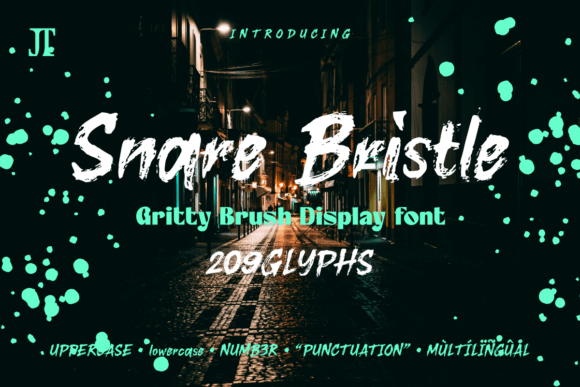
To utilize Snare Bristle effectively, one must first understand its construction. This is not a digitized version of a clean calligraphy script; it is a handcrafted brush style where the "mistakes" are the features. The font includes uppercase and lowercase characters, numbers, and punctuation, all unified by a consistent texture that mimics the friction of dry bristles against rough paper or concrete. The multilingual support ensures that this expressive quality translates across different languages without losing its core identity.
The technical execution involves preserving the natural bleed and splatter of physical media. When designers select this typeface, they are opting for a glyph set that retains authentic ink feel rather than vector-smoothed curves. This distinction is critical for projects aiming to evoke street art or grunge aesthetics. The rough textured edges serve a functional purpose beyond decoration; they break up the rigid grid systems common in modern layout design, introducing organic rhythm and movement that guides the viewer’s eye in unpredictable but engaging ways. Recognizing this intentional roughness prevents users from attempting to "clean up" the font, which would undermine its primary value proposition.
Strategic Applications in Commercial Branding
While often associated with underground art scenes, the utility of Snare Bristle extends into sophisticated commercial branding when applied with restraint and intent. For businesses targeting demographics that value individuality, rebellion, or craftsmanship, this typography acts as a visual shorthand for those attributes. In logo design, the font provides immediate differentiation in saturated markets. A coffee roaster, a skate shop, or an independent music label can use the typeface to signal heritage and hands-on quality without relying on clichéd vintage illustrations.
However, successful branding implementation requires balancing the font's wild nature with legibility requirements. Because Snare Bristle is a display font, it functions best as a headline or accent element rather than body copy. Pairing it with a neutral, highly readable sans-serif or slab serif creates necessary contrast. The grit of the brush strokes draws the eye to the brand name or campaign slogan, while the supporting typeface handles the informational heavy lifting. This symbiotic relationship ensures the design remains edgy without sacrificing user experience or accessibility standards.
Navigating Urban Grunge and Streetwear Aesthetics
The most direct application of Snare Bristle lies within streetwear and urban fashion design, where visual noise is a language of its own. In this context, the font’s chaotic energy aligns perfectly with the cultural ethos of the genre. Apparel graphics benefit significantly from the typeface’s scalability; the rough textures remain distinct even when printed on textured fabrics like heavyweight cotton or distressed denim. The ink-splash characteristics mimic screen printing imperfections, lending mass-produced garments a bespoke, limited-edition appearance.
Designers working on covers for posters, album art, or zines will find that Snare Bristle eliminates the need for external texture overlays. Traditionally, achieving a grunge look involved layering rasterized scratch textures over clean vector text, a process that can result in muddy prints or large file sizes. By integrating the texture directly into the letterforms, the workflow becomes more efficient and the output sharper. The font supports the creation of typography quotes and lyrical excerpts that feel handwritten and personal, bridging the gap between digital design and analog artistry. This is particularly relevant for social media content where scroll-stopping visuals are paramount; the high-contrast, textured letterforms perform exceptionally well on mobile screens where subtle details might otherwise be lost.
Packaging Design and Tactile Translation
Packaging presents a unique challenge for brush fonts: translating digital roughness into physical shelf presence. Snare Bristle excels here because its aesthetic suggests materiality. When used on craft paper, uncoated cardstock, or recycled materials, the font reinforces the sustainable or artisanal narrative of the product. The irregular baselines and varying stroke widths prevent the packaging from looking too manufactured, which is a key selling point for organic foods, craft beverages, and handmade cosmetics.
When implementing this typeface in packaging, designers must consider production methods. Embossing or debossing Snare Bristle adds a literal tactile dimension to the visual texture, creating a multisensory experience. However, the fine details of the ink splashes may require specific die-cutting tolerances or printing resolutions. Testing proofs is essential to ensure the "messy" aesthetic reads as intentional design rather than poor print quality. The font’s bold weight generally holds up well in embossing, whereas lighter variations might lose definition. Understanding these production constraints allows creatives to maximize the impact of the typeface while avoiding costly manufacturing errors.
Technical Considerations and File Management
Integrating Snare Bristle into professional workflows involves understanding the provided assets. The package includes both OTF (OpenType) and TTF (TrueType) files, ensuring compatibility across virtually all design software and operating systems. OpenType format is generally preferred for professional design work as it offers better support for advanced typographic features and cross-platform consistency. The full glyph set inclusion means designers have access to alternative characters and ligatures that can further customize the look, preventing repetitive patterns in longer headlines.
A crucial note for users is respecting the font's designed limitations. The warning that Snare Bristle is "intentionally rough and textured" serves as a guideline for modification. Applying additional distress filters or erosion effects in Photoshop or Illustrator often degrades the carefully crafted balance of the original glyphs. Instead of adding more chaos, designers should focus on spacing, scale, and color to modulate intensity. If a softer look is required, adjusting opacity or using muted color palettes is more effective than altering the vector paths. Maintaining the integrity of the source file ensures the font performs as intended across various resolutions and output sizes.
Accessibility and Legibility in Expressive Type
Using expressive, grunge-style fonts carries a responsibility regarding accessibility. While Snare Bristle is designed for impact, readability must never be entirely sacrificed for style. Designers should adhere to WCAG guidelines even when using display typefaces. This includes maintaining sufficient color contrast between the textured letters and the background. The rough edges of the font can sometimes reduce perceived contrast, so testing against accessibility standards is vital, especially for web-based social media graphics or digital posters.
Furthermore, cognitive load must be considered. The wild, artistic nature of the font requires more processing time for readers compared to standard typefaces. Limiting the use of Snare Bristle to short phrases, titles, or single words prevents viewer fatigue. In educational or informational contexts, the font should serve strictly as an entry point or emotional hook, immediately followed by clear, accessible explanatory text. This tiered approach respects the diverse needs of the audience, including those with dyslexia or visual impairments, while still delivering the desired rebellious personality. By treating Snare Bristle as a specialized instrument rather than a universal solution, designers can achieve powerful communication that is both aesthetically striking and functionally sound.
Cultural Resonance and Future-Proofing Design
The enduring appeal of fonts like Snare Bristle lies in their connection to tangible human experiences. In an era increasingly dominated by AI-generated imagery and algorithmic perfection, the messy, hand-brushed quality of this typeface offers a counter-narrative of human agency. It resonates with audiences craving genuine connection and imperfect beauty. For educators and researchers studying visual culture, this font serves as a case study in how digital tools emulate analog traditions to satisfy contemporary psychological needs.
For business owners and creators, investing in such distinctive typography is a strategy for future-proofing visual identity. Trends come and go, but the desire for authenticity remains constant. Snare Bristle avoids dating itself to a specific micro-trend by rooting its style in the timeless mediums of ink and brush. Whether used for a temporary social media campaign or a permanent rebrand, the font carries a weight and history that elevates the message above fleeting fads. Mastering its application allows designers to tap into a vein of creative expression that feels simultaneously urgent and enduring, proving that in the right hands, chaos can be the most effective form of order.