Understanding Dotplays: How Playful Typography Shapes Modern Design
In the vast landscape of graphic design and digital communication, typography serves as the voice of your visual message. While traditional serif and sans-serif fonts convey professionalism and stability, there is a growing demand for typefaces that evoke emotion, warmth, and approachability. Enter Dotplays, a distinctive display font that has captured the attention of designers seeking to infuse their projects with a cheerful and creative vibe. Understanding this typeface goes beyond merely appreciating its aesthetics; it involves recognizing how specific design choices influence viewer perception and engagement in modern media.
The Anatomy of Cheerful Typography
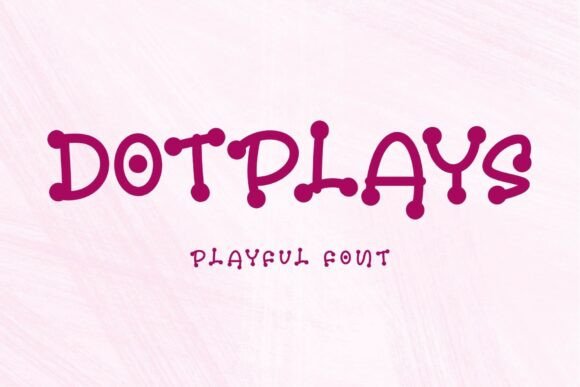
To truly appreciate why Dotplays works so effectively, we must first understand its construction. Typography is not just about legibility; it is about personality. Dotplays is classified as a display font, meaning it is designed primarily for headlines, logos, and short bursts of text rather than long-form body copy. Its defining characteristic lies in its unique rounded terminals and dotted connections.
Unlike sharp, geometric typefaces that can sometimes feel cold or overly corporate, Dotplays utilizes soft curves to create a sense of safety and friendliness. Psychological research in design suggests that rounded shapes are processed by the human brain as more welcoming and less threatening than angular ones. The distinctive dot accents found in each character serve a dual purpose: they add a rhythmic visual texture and reinforce the handcrafted nature of the font. This combination gives the typeface a modern look while retaining the nostalgic charm of handmade lettering.
Balancing Handcrafted Charm with Modern Utility
A common misunderstanding about playful fonts is that they lack professional utility or versatility. Many assume that "fun" equates to "messy" or "juvenile." However, Dotplays challenges this assumption by maintaining clean vector lines and consistent spacing. It bridges the gap between organic artistry and digital precision. This balance is crucial for contemporary designers who need the warmth of a hand-drawn aesthetic without sacrificing the scalability required for high-resolution screens and print materials.
Practical Applications Across Industries
The versatility of Dotplays makes it a valuable asset across various sectors. Its ability to command attention while remaining friendly allows it to function effectively in diverse contexts. Here is how this typeface fits into modern workflows:
- Children’s Education and Media: Perhaps the most natural home for Dotplays is in environments designed for younger audiences. The soft, rounded forms mimic the handwriting taught in early education, making text feel accessible and non-intimidating to new readers. It is ideal for book covers, educational apps, and classroom signage.
- Lifestyle and Creative Branding: For brands in the artisanal, craft, or wellness spaces, standard corporate fonts often fail to communicate the brand's soul. Dotplays adds a layer of authenticity to packaging, boutique logos, and product labels, suggesting that a human touch is behind the business.
- Social Media Content Creation: In the fast-scrolling environment of platforms like Instagram and TikTok, text must be instantly readable and emotionally resonant. The bold, dotted nature of this font creates high contrast against colorful backgrounds, ensuring that quotes, announcements, and captions stand out effortlessly.
- Event Marketing and Invitations: Whether for a birthday party, a community festival, or a creative workshop, the tone of an invitation sets expectations. Using Dotplays signals to attendees that the event will be relaxed, enjoyable, and inclusive.
The Role of Display Fonts in Digital Communication
In our current digital ecosystem, attention is a scarce resource. Users are bombarded with information, leading to banner blindness and scroll fatigue. Display fonts like Dotplays act as visual anchors. They break the monotony of standard web-safe fonts and signal to the user that the content is special or distinct.
However, using such a stylistic font requires intentionality. Because Dotplays is rich in detail and personality, it performs best when given room to breathe. Designers should avoid using it in all-caps for long sentences, as the unique dotted connections can reduce readability at small sizes. Instead, it shines in title case or mixed case settings where the ascenders and descenders can fully express the font’s playful rhythm. Understanding these usage parameters is what separates amateur design from professional typographic hierarchy.
Enhancing User Experience Through Emotional Design
We often discuss User Experience (UX) in terms of functionality and speed, but emotional design is equally critical. The choice of typeface contributes significantly to the overall mood of a website or application. When a user lands on a page featuring Dotplays, the immediate subconscious reaction is one of ease and positivity. This reduces cognitive friction and makes the user more receptive to the message being conveyed. In an era where digital interactions can feel sterile, incorporating human-centric typography helps rebuild a sense of connection between the brand and the audience.
Best Practices for Implementing Dotplays
To maximize the impact of this typeface while adhering to accessibility and design standards, consider the following guidelines:
- Pairing with Neutral Typefaces: Let Dotplays be the star. Pair it with a simple, clean sans-serif font for body text. This contrast ensures that the playful elements remain impactful without overwhelming the reader or compromising the legibility of essential information.
- Mind the Hierarchy: Use Dotplays strictly for headings, subheadings, call-to-action buttons, or decorative elements. Avoid using it for navigation menus or fine print, where clarity must always supersede style.
- Color Considerations: The rounded, soft nature of this font pairs beautifully with pastel palettes, bright primaries, or warm earth tones. High-contrast color combinations will further enhance the visibility of the dotted details.
- Accessibility Checks: Always test your typography for WCAG compliance. Ensure that even with the decorative dots and curves, the characters remain distinguishable for users with visual impairments. Sufficient size and spacing are key to maintaining inclusivity.
Why Typography Matters in Storytelling
Ultimately, choosing a font like Dotplays is a storytelling decision. Every curve and dot communicates a narrative before a single word is read. It tells the audience that the content is safe, creative, and joyful. For educators, it says learning is fun. For businesses, it says we care about people, not just profits. For creators, it says imagination matters.
As we move forward in a technology-driven world, the need for humanizing elements in design will only increase. Tools and fonts that bring a tactile, handcrafted feel to digital spaces help ground us and make technology feel more personal. Dotplays represents more than just a collection of glyphs; it is a tool for fostering connection in an increasingly disconnected world.
Whether you are a seasoned graphic designer looking to refresh your toolkit, a teacher creating engaging lesson plans, or a small business owner building a brand identity, understanding the nuance of playful typography empowers you to communicate more effectively. By leveraging the unique characteristics of Dotplays, you ensure that your message is not just seen, but felt. In the end, good design is invisible, but great typography is unforgettable.