Deborah and This Font: Mastering the Art of Uppercase Display Typography
In the vast landscape of digital design, typography serves as the voice of visual communication. While body text prioritizes readability and neutrality, display fonts carry the emotional weight and personality of a brand. Among these specialized typefaces, Deborah and This font stands out as a stunning decorative display option designed explicitly to be the center of attention. For creators, marketers, and designers looking to break away from ordinary aesthetics, understanding the specific utility and technical nature of this typeface is essential for effective implementation.
This article explores the role of high-impact display typography in modern design, specifically focusing on the unique characteristics of Deborah and This font. We will examine its artistic applications, technical specifications, and the critical considerations regarding its uppercase-only structure to help you integrate it seamlessly into your creative projects.
The Role of Decorative Display Fonts in Modern Design
To appreciate a font like Deborah and This, one must first understand the distinction between text fonts and display fonts. Text fonts are engineered for extended reading; they feature consistent spacing, moderate contrast, and familiar shapes that allow the eye to glide effortlessly across paragraphs. Display fonts, conversely, are designed for short bursts of text where legibility at small sizes is secondary to visual impact and stylistic expression.
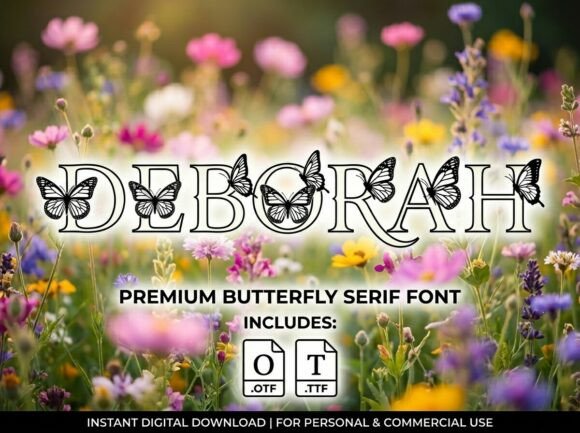
Deborah and This font embodies the core purpose of display typography: to arrest attention and convey immediate mood. Featuring unique artistic elements and a strong visual personality, it functions less like a tool for information transfer and more like an illustrative element. In an era dominated by social media scrolling and rapid content consumption, such typefaces serve as visual hooks. They signal to the viewer that the content is curated, artistic, or premium before a single word is cognitively processed.
Versatility Across Creative Mediums
Despite its ornate nature, this typeface maintains a professional and polished finish that prevents it from appearing amateurish. This balance makes it versatile enough for various high-stakes applications:
- Bold Headlines: In editorial design and web banners, the font creates hierarchy instantly, guiding the viewer’s eye to the most important message.
- Artistic Logos: Brand identity often requires distinctiveness. The unique letterforms provide a custom, bespoke feel without the cost of hand-lettering.
- Creative Packaging: On product labels, shelf appeal is paramount. The decorative nature of the font suggests craftsmanship and quality, particularly in beauty, fashion, and artisanal food sectors.
- Social Media Graphics: In square or vertical formats, space is limited. A high-impact display font maximizes visual real estate, ensuring messages remain readable and striking on mobile screens.
Understanding the All-Caps Uppercase Constraint
When evaluating Deborah and This font for purchase or use, there is one critical specification that defines its workflow: this is an ALL-CAPS Uppercase Only display typeface. For designers accustomed to standard type families, this limitation requires a shift in mindset and application strategy.
Why Uppercase Only?
The absence of lowercase letters is not a defect but a deliberate design choice. In decorative typography, maintaining visual consistency across varying letter heights (ascenders and descenders) can dilute the artistic impact. By restricting the character set to uppercase, the designer ensures that every letter occupies a similar visual footprint, creating a solid, architectural block of text. Each glyph is treated as an individual work of art, optimized for uniformity and presence rather than flow.
Best Practices for Uppercase Typography
Using an all-caps font effectively requires adherence to specific typographic rules to maintain professionalism:
- Avoid Long Passages: Uppercase text is significantly harder to read in bulk because the uniform rectangular shape of the words reduces word-shape recognition. Limit usage to headlines, logos, and short phrases.
- Increase Tracking (Letter Spacing): Decorative uppercase fonts often benefit from increased tracking. Adding space between characters improves legibility and adds an air of luxury and elegance. Tight spacing in display caps can make the design feel cluttered and aggressive.
- Pair with Neutral Body Text: Because Deborah and This has such a strong personality, it should be paired with simple, highly legible sans-serif or serif fonts for supporting text. Let the display font be the protagonist while the body text plays the supporting role.
- Mind the Hierarchy: Since you cannot rely on capitalization differences to create emphasis within the headline itself, use size, color, and weight variations in accompanying elements to establish clear information architecture.
Technical Specifications and File Formats
Professional design requires reliable assets. Deborah and This font is delivered in industry-standard formats that ensure compatibility across various platforms and software environments. Understanding the difference between these files helps streamline your workflow.
OTF (OpenType Font)
The OpenType format is the professional standard for advanced design and layout software like Adobe Illustrator, InDesign, and Photoshop. OTF files support a larger character set and advanced typographic features. While this specific font is uppercase-only, the OTF format ensures the highest fidelity when scaling, exporting, and manipulating vector paths. It is the preferred choice for print production, logo design, and high-resolution branding materials.
TTF (TrueType Font)
The TrueType format offers universal compatibility. TTF files are natively supported by Windows and macOS operating systems, as well as consumer-grade software like Microsoft Word, PowerPoint, and Canva. If you are creating presentations, internal documents, or working in non-Adobe environments, the TTF file ensures the font renders correctly without requiring additional plugins or conversions. Having both formats included guarantees that your design remains consistent whether you are finalizing a print-ready PDF or drafting a quick mockup.
Integrating Display Fonts into Professional Workflows
For businesses and educators, the selection of a typeface like Deborah and This extends beyond mere aesthetics; it is a strategic communication decision. In marketing, typography influences perception. Studies in consumer psychology suggest that decorative fonts can enhance perceived value and uniqueness, provided they align with the brand's voice. Using this font for a luxury spa brochure communicates relaxation and indulgence, whereas using it for a tech startup might signal creativity and disruption.
However, accessibility must always be considered. While display fonts are excellent for grabbing attention, they should never compromise the user experience. Always ensure that any text rendered in Deborah and This is supplemented with accessible alternatives. In web design, this means using proper HTML semantic tags so screen readers interpret the content correctly, regardless of the visual styling. In print, ensure sufficient contrast between the decorative letterforms and the background to maintain visibility for those with visual impairments.
Common Misunderstandings About Decorative Type
New designers often assume that a "decorative" font can replace standard typography entirely. It is vital to clarify that Deborah and This is a specialist tool, not a generalist solution. Attempting to use it for body copy, captions, or disclaimers will result in poor readability and a chaotic layout. Its significance lies in its restraint; it is powerful precisely because it is used sparingly.
Another common assumption is that uppercase-only fonts are inherently "loud" or aggressive. While this can be true, the artistic elements in Deborah and This soften the blow, allowing for elegance alongside impact. The key is context. When paired with ample whitespace and soft imagery, the font feels refined. When placed against high-contrast backgrounds with bold colors, it feels energetic. Mastering this typeface means learning to modulate its volume through surrounding design choices.
Conclusion: Elevating Visual Communication
Deborah and This font represents a commitment to distinctive visual storytelling. By combining unique artistic elements with professional-grade file formats, it offers creators a reliable way to elevate their work above the generic. Whether you are designing a wedding invitation, a boutique wine label, or a viral Instagram post, this typeface provides the necessary gravitas to make your message memorable.
Success with this font relies on respecting its constraints. Embrace the uppercase-only structure as a framework for boldness, utilize the appropriate file format for your software, and always prioritize hierarchy and pairing. When used with intention and understanding, Deborah and This transforms ordinary text into extraordinary art, proving that in the world of design, how you say something is just as important as what you say.