Derek: Commanding Attention Through Modern Typographic Authority
In an era defined by fleeting attention spans and saturated digital landscapes, the ability to communicate authority instantly is no longer a luxury for brands and creators; it is a fundamental requirement. Typography serves as the primary vehicle for this immediate communication, acting as the visual voice before a single word is cognitively processed. Within this context, Derek has emerged as a definitive solution for those seeking to bridge the gap between historical credibility and contemporary relevance. This versatile display typeface captures a modern-and-stately soul, offering a sophisticated alternative to the ubiquitous geometric sans-serifs that have dominated the last decade of design.
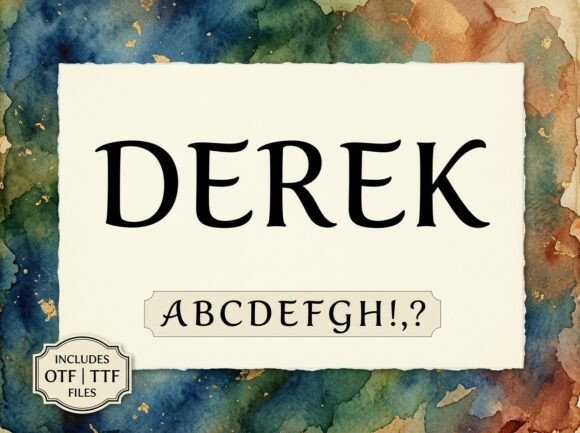
Derek is not merely a font; it is a strategic design asset characterized by clean, high-contrast letterforms and rhythmic, sharp terminals. Its subtle flared-serif construction radiates professional confidence without appearing antiquated or overly decorative. For independent corporate branding, sleek editorial layouts, professional portfolio logos, and high-impact social media headers, Derek provides a balanced structural weight that commands respect while maintaining a contemporary personality. Understanding why this specific typeface resonates requires looking at the broader evolution of visual communication and the shifting expectations of modern audiences.
The Shift from Neutral to Distinctive Branding
For much of the 2010s, the prevailing trend in corporate and digital identity was radical simplification. Major brands flattened their logos, adopted uniform sans-serif typefaces, and prioritized neutrality over character. While this approach improved legibility on early mobile screens, it created a sea of sameness where distinct brand voices were lost to generic minimalism. As screen resolutions have improved and digital literacy has matured, audience expectations have shifted. Users now crave distinctiveness and narrative depth in visual identities.
Derek arrives precisely at this inflection point. It rejects the safety of total neutrality in favor of intentional presence. The typeface’s high-contrast structure signals luxury and precision, traits that are increasingly associated with trustworthiness in digital commerce and content creation. Unlike traditional serifs that may feel too academic or stuffy for a tech startup or a creative freelancer, Derek’s sharp terminals and modern proportions ground it firmly in the present. It allows businesses to signal heritage and stability without sacrificing the agility required in today’s market. This evolution reflects a broader understanding that professionalism does not require erasure of personality; rather, true authority comes from a confident, well-defined aesthetic stance.
Anatomy of Confidence: Why Form Matters
The effectiveness of Derek lies in its specific anatomical details, which have been engineered to perform across diverse media. The "flared-serif" construction is the critical differentiator here. Traditional serifs often feature heavy brackets or abrupt transitions that can clutter small-scale digital rendering. Derek’s flares are subtle and rhythmic, providing just enough anchoring to guide the eye along a headline without creating visual noise. This makes it exceptionally readable in bold weights, where many high-contrast fonts typically fail due to thinning strokes or awkward spacing.
Furthermore, the balanced structural weight of the letterforms ensures that the typeface feels substantial even when used sparingly. In a world of lightweight UI design and ethereal aesthetics, visual weight equates to importance. When a user encounters a header set in Derek, the density of the ink communicates that the content beneath it is significant. This psychological association is vital for editorial layouts and long-form content where retaining reader engagement is paramount. The sharp terminals add a layer of crispness that prevents the stately nature of the font from becoming sluggish, ensuring that the overall tone remains energetic and forward-looking.
Practical Applications in Digital Ecosystems
Versatility is the hallmark of any successful display typeface in the modern workflow. Designers and marketers rarely work within a single medium; a brand identity must translate seamlessly from a business card to an Instagram story, from a website hero section to a PDF whitepaper. Derek’s design accounts for this cross-platform reality.
- Independent Corporate Branding: For startups and SMEs, establishing legitimacy is often the first hurdle. Derek provides the typographic maturity usually reserved for legacy institutions, helping newer entities punch above their visual weight class.
- Sleek Editorial Layouts: Magazine designers and bloggers benefit from the font’s high contrast, which creates dramatic hierarchy. It pairs exceptionally well with minimalist body text, allowing headlines to act as graphic elements rather than mere labels.
- Professional Portfolio Logos: Freelancers and creatives need wordmarks that are memorable yet unobtrusive. Derek’s unique rhythm allows for logotypes that feel custom-drawn rather than typed, adding value to personal branding efforts.
- Social Media Headers: On platforms like LinkedIn, X (formerly Twitter), and YouTube, thumbnail and banner clarity is non-negotiable. Derek’s bold weights maintain integrity even when compressed by platform algorithms, ensuring your message remains sharp on mobile devices.
Navigating Current Design Trends with Intention
Current design discourse is heavily focused on accessibility, inclusivity, and user experience. There is sometimes a misconception that "accessible" design must be visually plain. Derek challenges this notion by demonstrating that aesthetic richness and functional clarity can coexist. The font’s open counters and distinct character shapes aid in rapid recognition, which supports cognitive ease for readers. However, designers must apply it with intention. Using Derek for body copy would be a misuse of its display-focused engineering; its power is unlocked specifically in headings, pull quotes, and navigational elements where size and spacing can be optimized.
Moreover, the rise of AI-generated imagery and content has placed a premium on human-centric craftsmanship. Audiences are becoming adept at spotting synthetic or generic visuals. A typeface like Derek, with its nuanced, humanist touches and deliberate imperfections in rhythm, signals human oversight and curation. It acts as a counterbalance to the sterile perfection of algorithmic design, reinforcing the authenticity of the brand or creator behind the screen. In this sense, choosing Derek is not just an aesthetic decision but a positioning strategy that aligns with the growing demand for genuine human connection in digital spaces.
Pairing and Hierarchy Strategies
To maximize the impact of Derek, one must consider its relationship with supporting typefaces. Because Derek possesses such a strong personality and high contrast, it generally performs best when paired with neutral, low-contrast sans-serifs or simple monospaced fonts for body text. This creates a dynamic tension that guides the user through the content hierarchy effectively.
- Establish Scale Early: Derek thrives at larger sizes. Do not be afraid to push headlines to 72pt or higher in web contexts. The font’s details only become apparent when given room to breathe.
- Mind the Tracking: At display sizes, tight tracking can enhance the rhythmic quality of the sharp terminals. Conversely, for all-caps settings in navigation or subheaders, slightly opening the tracking improves legibility and adds a cinematic quality.
- Color Contrast: High-contrast letterforms require careful color management. Ensure sufficient contrast ratios against backgrounds, especially when using lighter weights. Derek’s bold weights are generally more forgiving in low-contrast scenarios, making them safer for vibrant or photographic backgrounds.
- Whitespace as an Active Element: The stately nature of Derek demands negative space. Crowding the typeface diminishes its authoritative presence. Treat the empty space around a Derek headline as part of the composition, allowing the "modern-and-stately soul" of the font to resonate.
Future-Proofing Visual Identity
Trends in typography are cyclical, but the need for clear, authoritative communication is constant. While we may see shifts toward variable fonts, kinetic typography, or experimental layouts, the foundational role of a strong display serif remains secure. Derek is positioned to endure because it is rooted in classical proportionality while being executed with modern tooling and sensibilities. It avoids the pitfalls of being too trendy to age well, yet it lacks the dustiness that dates older revivals.
For professionals and business owners, investing in a typeface like Derek is an investment in long-term brand equity. It reduces the need for frequent rebranding cycles driven by chasing micro-trends. Instead, it provides a stable visual anchor that can evolve with the organization. Whether you are launching a new venture, refreshing an editorial platform, or refining your personal portfolio, Derek offers a pathway to command attention that feels earned rather than forced. It respects the intelligence of the viewer while asserting the confidence of the speaker, creating a dialogue that is both visually arresting and substantively grounded. In the crowded marketplace of ideas, such clarity is the ultimate competitive advantage.