Evaluating Aerox for Display and Motion Design
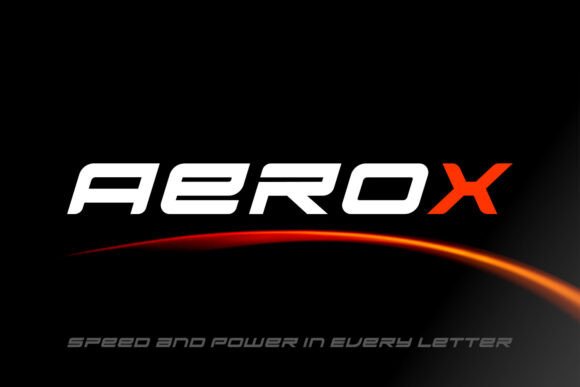
Selecting the appropriate typeface for high-impact visual projects requires balancing aesthetic appeal with functional legibility. Aerox is a geometric, slanted display font that occupies a specific niche within this selection process. Characterized by sharp angles, wide proportions, and an inherent italicized structure, it is engineered to convey motion, speed, and a futuristic aesthetic. For designers and brand managers evaluating typography for automotive graphics, esports identities, or technology interfaces, understanding the practical applications and limitations of Aerox is essential for making an informed decision.
Defining the Aerox Aesthetic
Aerox distinguishes itself through a commitment to geometric precision combined with dynamic slanting. Unlike traditional italics, which are often oblique versions of upright roman fonts, Aerox is designed with its slant as a foundational element. This structural choice creates a consistent sense of forward momentum without relying on artificial distortion. The stroke weight remains uniform throughout the character set, reinforcing the mechanical and industrial nature of the design.
The typeface includes standard uppercase letters alongside stylized lowercase alternatives. This distinction is critical for evaluation; the lowercase forms are not merely smaller versions of the capitals but are designed to complement the aggressive geometry of the uppercase set. Comprehensive punctuation and numerals are also included, ensuring that the font can handle technical data, racing numbers, or interface elements without breaking the visual language. However, because it is strictly a display typeface, its utility is bounded by size and context.
Primary Use Cases and Strategic Fit
Evaluation of Aerox should begin with alignment to specific project goals. The typeface excels in environments where static text must imply kinetic energy. Its wide proportions and sharp terminations make it particularly effective in the following sectors:
- Automotive and Motorsport: The slanted structure mimics the aerodynamics of vehicles in motion. It is suitable for livery design, dashboard interfaces, and promotional materials where speed is a core brand attribute.
- Esports and Gaming: Competitive gaming branding often requires typography that feels energetic and modern. Aerox provides a distinct alternative to overused sci-fi fonts while maintaining the necessary aggression and tech-forward appearance.
- Industrial Branding: For manufacturing or engineering firms, the consistent stroke weight and geometric construction suggest precision, reliability, and technical expertise.
- Technology Interfaces: In UI/UX design for specialized hardware or futuristic software concepts, Aerox serves as an effective header font that establishes tone without compromising the clean lines required for digital screens.
If a project demands a sense of urgency, velocity, or mechanical precision, Aerox is a strong candidate. Its visual weight commands attention at large sizes, making it ideal for headlines, logos, and short-form callouts.
Benefits and Functional Advantages
Beyond its visual style, Aerox offers several practical benefits for display work. The wide proportions increase horizontal visibility, which is advantageous for signage and banners where reading distance is significant. The consistent stroke weight ensures that the font reproduces well across various media, from vinyl wraps to digital screens, without thinning out or becoming too heavy.
Furthermore, the inclusion of stylized lowercase alternatives provides designers with flexibility. While all-caps settings are common in this genre, having access to unique lowercase forms allows for more nuanced typographic hierarchies in subheads or supporting graphics. This versatility reduces the need to pair multiple display fonts, streamlining the design system and maintaining visual cohesion.
Tradeoffs and Limitations
No typeface is universally applicable, and Aerox has distinct constraints that must be weighed during the selection process. The primary limitation is legibility at small sizes or in extended text blocks. The sharp angles and slanted geometry, while striking in headlines, can reduce character recognition when scaled down. It is not suitable for body copy, captions, or any application requiring sustained reading.
Additionally, the wide aspect ratio means that Aerox consumes significant horizontal space. In layouts with strict width constraints, such as mobile interfaces or narrow columns, the font may require excessive tracking adjustments or scaling that compromises its intended proportions. Designers working in vertical formats or tight grids may find the typeface difficult to integrate without disrupting the overall composition.
The strong personality of Aerox is another consideration. It dominates a layout and can easily clash with other decorative elements. If a brand identity already features complex iconography or busy imagery, introducing such a distinctive typeface may result in visual competition rather than harmony. It performs best when given ample negative space and paired with neutral, highly legible sans-serif typefaces for supporting text.
When to Consider Alternatives
While Aerox is effective for conveying speed and futurism, there are scenarios where alternative typefaces may better serve project objectives:
- Extended Body Text: If the project requires a unified type family that spans from headlines to paragraphs, a versatile grotesque or neo-grotesque sans-serif with optional italic styles is a more functional choice.
- Traditional or Organic Brands: For brands emphasizing heritage, craftsmanship, or natural qualities, the mechanical rigidity of Aerox may send conflicting signals. Humanist sans-serifs or serifs would better align with these values.
- Space-Constrained Environments: When horizontal real estate is limited, condensed typefaces or narrower geometric sans-serifs provide similar modern aesthetics without the spatial demands of Aerox’s wide proportions.
- Subtle Motion Requirements: If the goal is to suggest movement without overt aggression, a typeface with softer terminals or a less extreme slant may achieve the desired effect while maintaining higher legibility.
Making the Final Decision
Determining whether Aerox aligns with your needs requires testing within the actual project context. Evaluate the typeface at the intended display sizes and in the specific color combinations planned for production. Assess how it interacts with existing brand assets and whether it enhances or distracts from the core message.
Consider the longevity of the application. Trend-driven display fonts can date quickly, but Aerox’s foundation in geometric principles provides some resistance to fleeting trends. Its aesthetic is rooted in functionalist design traditions, which may offer greater staying power than purely decorative novelty fonts. However, if the project requires timelessness over immediate impact, a more restrained typeface might be prudent.
Ultimately, Aerox is a specialized tool designed for specific communicative tasks. It succeeds when the goal is to visualize speed, technology, and precision through typography. By carefully weighing its distinctive characteristics against project requirements and constraints, designers can determine whether this typeface will elevate their work or whether a different solution would better serve their audience and objectives.