Toadface: Evaluating an Organic Display Typeface for Nature-Themed Design
Selecting the appropriate typography for nature-inspired projects requires balancing aesthetic appeal with functional legibility. Toadface is a display typeface designed specifically to address this niche, offering a visual identity that merges earthy weight with organic irregularity. Unlike standard geometric sans-serifs or traditional hand-lettered scripts, Toadface occupies a distinct middle ground characterized by amphibian-inspired curves and a rhythmic bounce. For designers, authors, and brand managers evaluating type options for children’s media, organic product packaging, or environmental education, understanding the specific utility and limitations of this font is essential for making an informed selection.
Defining the Visual Characteristics of Toadface
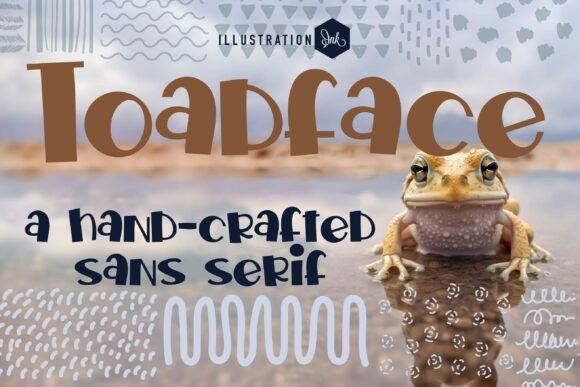
Toadface is classified as a weighted sans-serif display font, but its construction deviates from mechanical precision. The letterforms are defined by soft terminals and varying stroke widths that mimic natural growth patterns rather than digital grid alignment. This "charmingly irregular" quality is intentional, providing a handcrafted personality that feels authentic rather than manufactured. The typeface features unique curves inspired by amphibian anatomy, resulting in shapes that feel sturdy yet pliable.
The rhythm of the typeface is another defining trait. Rather than sitting on a perfectly flat baseline, the characters possess a subtle vertical oscillation. This organic bounce creates a sense of movement and playfulness without sacrificing structural integrity. For evaluators, it is important to note that this irregularity is consistent across the character set, ensuring that the texture remains uniform even when used in longer headlines or titles. The overall impression is one of approachable durability, making it visually distinct from both fragile script fonts and rigid industrial sans-serifs.
Ideal Applications and Strategic Fit
Evaluating whether Toadface aligns with project goals involves assessing its performance in specific contexts where tone and audience expectation intersect. The typeface excels in environments that demand high-impact authenticity and a connection to the natural world.
- Independent Children’s Literature: Toadface is particularly effective for picture books and early reader covers. Its weighted forms ensure readability for developing readers, while the playful soul supports narrative themes involving animals, forests, or outdoor exploration. The font avoids the overly saccharine quality of some juvenile typefaces, appealing to adult purchasers who value sophisticated illustration styles.
- Organic Product Packaging: For snack brands, teas, or sustainable goods, typography must communicate natural ingredients and ethical sourcing. Toadface provides an earthy anchor on packaging shelves dominated by clean, minimalist sans-serifs. Its handcrafted aesthetic signals artisanal quality and differentiates products from mass-market competitors using generic corporate typography.
- Environmental Education Branding: Museums, nature centers, and pond-life educational programs require branding that feels welcoming to families while maintaining institutional credibility. Toadface bridges this gap by offering professional weight with accessible warmth. It functions well on signage, workshop materials, and digital headers where engagement is the primary metric.
- Social Media Headers: In digital spaces, display fonts must remain legible at various screen resolutions. The sturdy construction of Toadface allows it to perform well in social media banners and story overlays. The unique silhouette of the letterforms aids in instant brand recognition within crowded feeds.
Tradeoffs and Functional Considerations
While Toadface offers distinct advantages for nature-themed design, objective evaluation requires acknowledging its limitations. Display typefaces with significant personality inherently carry tradeoffs regarding versatility and readability.
Legibility at Small Sizes: Due to its rhythmic bounce and irregular curves, Toadface is not optimized for body copy or small-point text. At sizes below 18–24 points (depending on output medium), the organic details may blur, and the baseline variation can hinder reading flow. Evaluators should plan to pair this typeface with a neutral, highly legible serif or sans-serif for extended text blocks.
Tone Specificity: The strong personality of Toadface makes it less suitable for projects requiring neutrality, luxury, or technological precision. If the brand voice is clinical, high-end fashion, or corporate finance, this typeface will likely create cognitive dissonance. It is a specialized tool, not a universal solution.
Visual Weight Management: The earthy, weighted nature of the letterforms means Toadface commands significant visual space. In layouts with dense imagery or complex illustrations, careful attention to negative space is required to prevent the composition from feeling cluttered. Designers may need to adjust tracking or leading more aggressively than they would with standardized geometric fonts to maintain balance.
Comparing Toadface Against Alternatives
When deciding whether to implement Toadface, it is helpful to compare it against other common typographic choices in the nature and children’s market sectors.
Versus Standard Geometric Sans-Serifs
Families like Futura or Century Gothic offer superior versatility and legibility but often lack emotional resonance. They can appear sterile or corporate in organic contexts. Toadface sacrifices some mechanical perfection to gain warmth and narrative character. Choose Toadface if the goal is emotional connection; choose geometric sans-serifs if the priority is information density and neutrality.
Versus Hand-Lettered Scripts
Many nature brands utilize brush scripts or handwritten fonts to convey authenticity. However, these often suffer from poor legibility and can appear amateurish if not executed perfectly. Toadface offers a compromise: it retains the human touch and irregularity of hand-lettering but maintains the consistency and sturdiness of a constructed typeface. It is generally the safer choice for commercial packaging and educational materials where clarity is non-negotiable.
Versus Traditional Serifs
Classic serifs convey heritage and trustworthiness but can sometimes feel too formal or academic for playful or grassroots nature projects. Toadface provides a similar sense of substance through its weight but replaces traditional elegance with biological softness. It is preferable when the target audience includes children or when the brand positioning emphasizes wildness over cultivation.
Decision-Making Framework for Selection
Determining if Toadface is the correct investment involves a practical assessment of project parameters. Consider the following criteria during the evaluation phase:
- Audience Age and Literacy Level: If the primary audience is pre-literate or early-literacy, Toadface’s distinct shapes aid in letter recognition and engagement. If the audience is strictly adult and the content is data-heavy, reconsider.
- Brand Positioning: Does the brand lean toward "wild/natural" or "refined/curated"? Toadface serves the former. For refined botanical brands, a delicate serif might be more appropriate.
- Layout Hierarchy: Assess whether the project has sufficient hierarchy to support a display-only font. If the design relies on a single typeface for all communication, Toadface will likely fail. It requires a supporting cast of utilitarian typefaces.
- Reproduction Method: Test the font in the intended final medium. The soft edges and weighted strokes render beautifully in print and high-resolution screens but should be tested for embroidery, laser cutting, or low-resolution faxing, where fine organic details may be lost.
Ultimately, Toadface serves as a strategic asset for projects aiming to capture a natural-and-playful soul without compromising professional presentation. By weighing its organic benefits against its functional constraints, designers and stakeholders can determine if this charmingly irregular typeface aligns with their specific creative and communicative objectives. Successful implementation relies not just on the font's inherent qualities, but on thoughtful pairing and contextual application that respects both the aesthetic intent and the end-user experience.