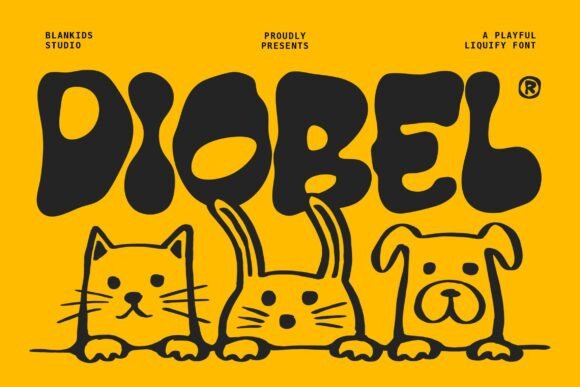
Evaluating Diobel: A Practical Guide to Playful Display Typography
Selecting the right typeface is a critical decision in visual communication, particularly when the design objective involves conveying personality, approachability, or whimsy. Diobel is a display font that has emerged as a notable option for designers seeking to move away from rigid geometric structures toward something more organic and expressive. Characterized by its rounded, soft, and liquified letterforms, Diobel offers a distinct aesthetic that prioritizes friendliness and charm. However, like any specialized typographic tool, it serves specific functional roles within a design system. Understanding the practical applications, limitations, and strategic fit of Diobel is essential for designers evaluating whether this typeface aligns with their current project requirements.
Defining the Diobel Aesthetic
Diobel is classified as a playful display font, a category defined by high-impact visuals intended for large-scale usage rather than extended reading. The primary differentiator of this typeface is its "liquified" construction. Unlike standard rounded sans-serifs that maintain consistent stroke widths and mathematical curves, Diobel features variable thickness and fluid transitions between strokes. This creates an organic sensation, mimicking the behavior of viscous liquids or hand-drawn markers rather than digital vectors.
The letterforms are bold and occupy significant negative space, contributing to a dense visual texture. This weight ensures legibility at headline sizes while simultaneously establishing a tone that is inherently cute and expressive. For evaluators, it is important to note that this aesthetic is not merely decorative; it functions as a semantic signal. The softness of the glyphs reduces cognitive friction, making content appear less authoritative and more inviting. This makes Diobel a functional choice for brands attempting to humanize their digital presence or soften corporate messaging without sacrificing visibility.
Strategic Benefits and Ideal Use Cases
When considering Diobel for a project, the evaluation should focus on environments where emotional connection supersedes information density. The typeface excels in scenarios requiring immediate attention and positive sentiment association.
- Brand Identity for Youth and Lifestyle Markets: Diobel is particularly effective for products targeting children, Gen Z, or lifestyle demographics where playfulness is a core brand value. Its organic shapes resonate with audiences accustomed to informal, digital-native aesthetics.
- Packaging and Point-of-Sale: In retail environments, shelf impact is paramount. The bold, liquified forms of Diobel create distinct silhouettes that stand out against cleaner, more traditional competitor packaging. It communicates flavor, fun, or novelty instantly.
- Digital Headlines and Social Media: On screens, especially mobile devices, Diobel maintains clarity due to its weight. It performs well in social media graphics, app splash screens, and website hero sections where the goal is to stop the scroll and convey a friendly vibe within seconds.
- Event and Campaign Signage: For festivals, workshops, or community events, the font’s expressive nature supports themes of creativity and inclusivity. It avoids the sterility often associated with institutional typography.
In these contexts, Diobel acts as a primary voice. Its personality is strong enough to carry the design without heavy reliance on supporting illustration, potentially streamlining production workflows.
Tradeoffs and Functional Limitations
A balanced evaluation must address where Diobel falls short. As a display typeface with idiosyncratic proportions, it carries inherent constraints that may disqualify it from certain aspects of a comprehensive design system.
Legibility at Small Sizes
The very features that make Diobel charming at 72pt render it problematic at 12pt. The liquified connections and rounded terminals can merge when scaled down, reducing character recognition. Evaluators should test the font at the smallest intended size early in the selection process. If body copy, captions, or UI labels require this typeface, it will likely fail accessibility standards and user experience benchmarks.
Tonal Specificity
Diobel possesses a dominant personality. It is difficult to use this font neutrally. Projects requiring gravitas, luxury, technical precision, or corporate formality may find Diobel counterproductive. Using it in financial reporting, legal documentation, or high-end fashion branding could create cognitive dissonance, undermining trust or perceived value. Designers must ensure the font’s inherent "cuteness" does not clash with the serious nature of the content.
Pairing Complexity
Because Diobel is so expressive, pairing it requires careful consideration. Combining it with another decorative font often results in visual chaos. It typically demands a partner typeface that is structurally simple and neutral, such as a geometric sans-serif or a clean grotesque, to provide necessary contrast and resting points for the eye. Evaluators should budget time for testing pairings to ensure hierarchy remains clear.
Comparative Evaluation: When to Consider Alternatives
While Diobel is a strong contender in the playful display category, it is not the only solution. Decision-makers should compare it against alternatives based on specific project nuances.
If the project requires playfulness but also needs to function across a wider range of sizes, a rounded sans-serif family (such as Quicksand or Varela Round) may be superior. These offer similar warmth but with standardized proportions that remain legible in body text. They are safer choices for comprehensive UI systems where consistency is key.
If the goal is organic expression but the brand leans towards artisanal or vintage rather than modern and bubbly, a hand-lettered brush script might be more appropriate. Scripts convey human touch through imperfection and flow, whereas Diobel conveys it through soft geometry. Scripts suggest tradition and craft; Diobel suggests digital-native fun.
For projects needing extreme boldness and attention-grabbing power but with a more structured, retro feel, bubble fonts or inflated typefaces with sharper edges might offer better versatility. These retain the volume of Diobel but often integrate more easily into grid-based layouts due to their more predictable bounding boxes.
Decision-Making Framework for Adoption
To determine if Diobel is the correct investment for a specific need, stakeholders should apply the following practical criteria during the evaluation phase:
- Audit the Content Hierarchy: Is the primary use case strictly headlines, logos, or call-to-action buttons? If the answer includes paragraphs or data tables, Diobel should be relegated to accent status or replaced entirely.
- Assess Brand Alignment: Does the brand voice include descriptors like "friendly," "approachable," "fun," or "soft"? If the brand pillars are "premium," "exclusive," or "technical," Diobel is likely a mismatch regardless of current design trends.
- Test Cross-Platform Rendering: Liquified forms can render differently across operating systems and browsers. Practical evaluation requires testing Diobel on actual target devices, not just in design software, to ensure the organic shapes do not pixelate or distort unexpectedly.
- Evaluate Longevity vs. Trend: Playful, blob-like typography experiences cyclical popularity. Consider whether the project is a short-term campaign (where trendiness is an asset) or a long-term rebrand (where timelessness may be preferred). Diobel is excellent for campaigns but requires confidence for decade-long identity systems.
- Check Licensing Flexibility: Ensure the license covers all intended mediums, particularly web embedding and app usage, which sometimes have separate tiers for display fonts.
Ultimately, Diobel is a specialized instrument in the typographic toolkit. It solves specific problems related to engagement, tone, and visual softness. By objectively weighing its expressive benefits against its functional limitations, designers and stakeholders can make informed decisions that leverage Diobel’s unique character effectively while maintaining usability and brand coherence. When applied with intention and restraint, it transforms static text into a dynamic element of visual storytelling.