Uncle Farmer: Evaluating Fit, Style, and Practical Application for Display Typography
Selecting the appropriate display typeface is often the most critical decision in establishing a project's emotional tone. While body copy prioritizes legibility and neutrality, display fonts must carry the weight of personality and atmosphere. Uncle Farmer enters this space as a hand-sketched option designed to evoke warmth, nostalgia, and approachability. For designers and creatives aged 20 to 50 who are currently vetting typography options, understanding where this specific typeface sits within the broader ecosystem of handwritten and rustic fonts is essential for making an informed choice.
Uncle Farmer is distinct in its attempt to balance organic imperfection with professional usability. Unlike digital fonts that simulate handwriting through rigid repetition, or genuine vintage lettering that may suffer from degradation, this typeface offers a curated "cherished friend" aesthetic. It is engineered to provide the effervescent charm of analog sketching while maintaining the technical reliability required for modern print and digital workflows. However, like any specialized design tool, it has specific strengths and limitations that determine its suitability for a given project.
Defining the Aesthetic: Warmth Versus Precision
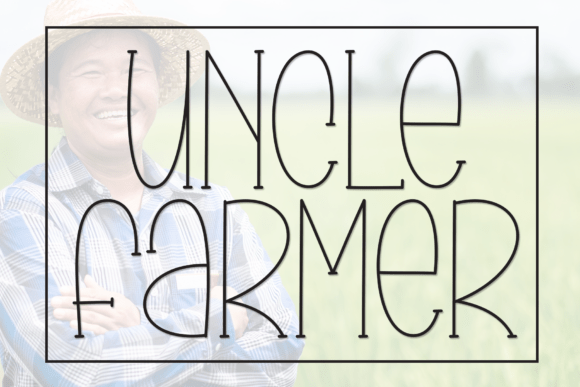
To evaluate Uncle Farmer effectively, one must first understand its core design philosophy. The typeface is categorized as a hand-sketched display font, but its execution leans heavily into comfort rather than chaos. Many fonts in this category prioritize extreme distress or illegible artistic flair to achieve authenticity. Uncle Farmer, conversely, focuses on a "supremely comfortable" reading experience. The strokes are deliberate and cheerful without being overly juvenile or messy.
This distinction matters significantly when comparing it to other resources in your design arsenal:
- Versus Grunge/Rustic Fonts: Traditional rustic typefaces often use heavy texture masks and eroded edges to signal age. While effective for historical accuracy, they can reduce readability at smaller sizes or on low-resolution screens. Uncle Farmer achieves a vintage feel through form and rhythm rather than surface noise, making it more versatile for clean layouts that still require soul.
- Versus Script Calligraphy: Formal scripts convey elegance and tradition but can sometimes feel distant or overly serious. Uncle Farmer replaces formality with geniality. Where a script says "exclusive event," this typeface suggests "welcoming gathering."
- Versus Geometric Sans-Serifs: Modern geometric fonts offer clarity but often lack emotional resonance. If a project brief specifies "approachable" or "human-centric," a standard sans-serif may fail to deliver the necessary subtext, whereas Uncle Farmer provides immediate emotional signaling.
Ideal Use Cases and Best-Fit Scenarios
The description of Uncle Farmer highlights "dreamy wedding invitations" and "genial greeting cards," but practical application extends beyond these traditional boundaries. When researching whether this font aligns with your current needs, consider how its specific attributes interact with different media and audiences.
Wedding and Event Stationery
In the context of weddings, the market is saturated with high-contrast serifs and flowing scripts. Uncle Farmer serves as a strategic alternative for couples seeking a non-traditional, relaxed, or outdoor-themed celebration. Its hand-sketched nature pairs exceptionally well with kraft paper, textured linens, and botanical illustrations. However, it is best utilized for headlines, names, and short quotes rather than dense logistical text. For seating charts or detailed itineraries, pairing it with a clean, neutral sans-serif ensures guests can read information quickly while still feeling the overarching theme.
Artisanal and Lifestyle Branding
For brands in the coffee, bakery, craft beer, or sustainable goods sectors, typography acts as a proxy for product quality. Uncle Farmer’s "effervescent charm" communicates small-batch production and human involvement. It signals to consumers that the product is crafted rather than manufactured. In this scenario, the font works best on packaging labels, social media headers, and about-page storytelling. It bridges the gap between professional branding and homemade authenticity, a balance that is difficult to achieve with standard commercial fonts.
Editorial and Digital Content
While primarily a display face, Uncle Farmer can function in digital environments if used judiciously. It is effective for pull quotes, sidebar headers, or hero text on lifestyle blogs. The key factor here is screen rendering. Because the font relies on sketched lines rather than solid vectors, designers must test it across devices to ensure the delicate details do not disappear on mobile screens or become pixelated on non-retina displays.
Tradeoffs and Limitations to Consider
No typeface is universally applicable. An objective evaluation of Uncle Farmer requires acknowledging scenarios where it may not be the optimal choice. Understanding these tradeoffs prevents costly redesigns or accessibility issues later in the project lifecycle.
Legibility at Small Sizes: The very characteristics that give Uncle Farmer its charm—variable stroke width and organic terminals—become liabilities below 18pt (or equivalent pixel size). In fine print, legal disclaimers, or complex data tables, this font will fail. It is strictly a display tool. If your project requires a single type family to handle both headlines and body copy, you will need to source a complementary secondary font.
Tone Mismatch: The font emits "joyful charisma." This makes it unsuitable for corporate finance, medical communications, luxury fashion, or somber memorial content. Even if a brand wants to appear friendly, there is a threshold where hand-sketched typography undermines authority. Evaluate your audience's expectations carefully; in some industries, polish equates to trust, and sketchiness may be misinterpreted as unprofessionalism.
Licensing and Scalability: As with many independent display typefaces, verify the licensing terms regarding web embedding, app usage, and merchandise. Some licenses for charming display fonts are restricted to personal use or static print. If you are building a scalable brand identity that will appear on t-shirts, apps, and video content, ensure the license covers all intended touchpoints before committing to the selection.
Technical Integration and Pairing Strategies
Successfully implementing Uncle Farmer depends less on the font itself and more on what surrounds it. Because it possesses such a strong personality, it requires supportive elements that ground the design without competing for attention.
- Contrast is Key: Avoid pairing Uncle Farmer with other handwritten or decorative fonts. The result is visual noise. Instead, pair it with structured grotesques, geometric sans-serifs, or classic transitional serifs. The tension between the organic headline and the rational body copy creates a sophisticated, balanced layout.
- Whitespace Management: Hand-sketched fonts often have irregular metrics and wider side bearings than standard typefaces. Allow for generous whitespace around Uncle Farmer to let the letterforms breathe. Cramping this font against margins or other elements negates its "comfortable" essence and makes the design feel cluttered.
- Color and Texture Interaction: This typeface responds well to color. Unlike stark black-and-white corporate fonts, Uncle Farmer retains its character when rendered in muted earth tones, pastels, or warm metallics. However, avoid placing it over busy photographic backgrounds without adequate contrast or overlay, as the sketched lines can get lost in image detail.
Making the Final Decision
When comparing Uncle Farmer against alternatives in your research phase, move beyond subjective preference and assess functional fit. Ask three guiding questions:
- Does the project require emotional warmth over structural precision? If yes, this font is a strong candidate.
- Will the text be viewed primarily at large sizes? If the answer is no, look for a cleaner alternative.
- Does the target audience associate "hand-sketched" with positive attributes like authenticity and care? Context dictates perception; ensure the aesthetic aligns with user expectations.
Uncle Farmer represents a specific niche within display typography: the intersection of nostalgia and modern usability. It is neither a historical reproduction nor a sterile digital imitation. For projects demanding a "cherished friend's hug" alongside professional execution, it offers a compelling solution. However, for designers requiring versatility, high-density readability, or formal authority, it should remain in the archive rather than the active toolkit. By weighing these factors objectively, you can determine whether this charming gem amplifies your design arsenal or if another resource better serves your strategic goals.