Galory Font: Bold Retro Typography for Modern Brands
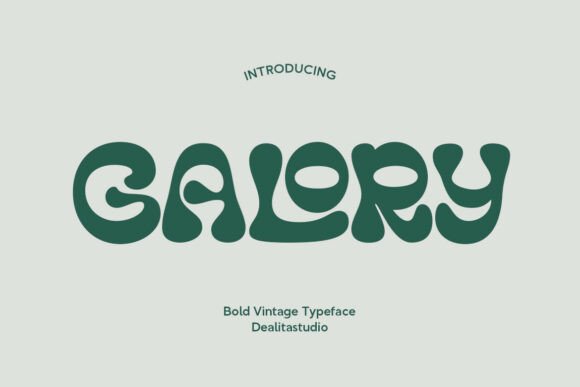
In the current design landscape, nostalgia is more than just a fleeting trend; it is a powerful communication tool that bridges generational gaps and evokes immediate emotional responses. Galory emerges as a definitive solution for designers seeking to harness this power without sacrificing contemporary relevance. This bold, retro-inspired display font captures the vibrant, unapologetic spirit of the 1970s while integrating modern typographic standards. Unlike generic vintage typefaces that often feel like dusty relics, Galory offers a fresh interpretation of funk and groove, making it an essential asset for projects that demand attention, personality, and stylistic confidence.
Defining the Galory Aesthetic
At its core, Galory is a study in balanced tension. It possesses the heavy weight and confident stance typical of 70s headline typography, yet its construction avoids the technical flaws often found in digitized fonts from that era. The letterforms feature strong curves and dynamic shapes that create a rhythmic flow across the page. This isn't a static font; it has movement. The "funky personality" mentioned in its description translates practically to a typeface that feels alive, making it particularly effective for brands that want to appear energetic and approachable rather than corporate and sterile.
The font’s unique character lies in its ability to be playful without becoming juvenile. Many novelty retro fonts sacrifice legibility for style, but Galory maintains a robust structure that ensures readability even at smaller display sizes. This makes it versatile enough for both massive billboard applications and intricate packaging details. For designers tired of overused geometric sans-serifs or overly ornate scripts, Galory provides a middle ground: distinctively stylized yet functionally sound.
Strategic Applications in Branding and Packaging
The most immediate value of Galory appears in commercial branding and product packaging. In a saturated market, shelf presence is paramount. Vintage aesthetics currently dominate sectors ranging from craft beverages to sustainable fashion, but consumers are becoming discerning. They can distinguish between authentic retro revival and cheap imitation. Galory supports the former by providing a typographic voice that feels curated and intentional.
- Craft Beverage Labeling: Breweries, coffee roasters, and natural wine producers benefit from Galory’s warmth. The font suggests artisanal quality and heritage, helping new products establish instant credibility on crowded shelves.
- Fashion and Apparel: Streetwear and boutique fashion labels utilize Galory for hang tags, t-shirt graphics, and campaign headers. Its bold structure pairs exceptionally well with minimalist photography, creating a high-contrast visual hierarchy that drives engagement.
- Hospitality and Events: Music festivals, vinyl record stores, and themed hospitality venues use Galory to set the tone before a customer even enters. It acts as a visual shorthand for the experience inside, signaling fun, creativity, and cultural awareness.
When implementing Galory in these contexts, consider the tactile nature of the final output. This font responds beautifully to texture. Printing techniques like letterpress, embossing, or spot UV enhance its curvaceous forms, adding a physical dimension that digital screens cannot replicate. The weight of the strokes allows for ink spread in traditional printing, which actually enhances the vintage authenticity rather than detracting from it.
Digital Presence and User Engagement
While rooted in analog history, Galory performs surprisingly well in digital environments. Web designers and social media creators face the challenge of stopping the scroll in feeds dominated by uniform typography. Using Galory for hero banners, Instagram story overlays, or YouTube thumbnails introduces a pattern interrupt. The human eye is drawn to irregularity and character, and Galory’s distinctive silhouette provides exactly that.
However, practical usability requires restraint. As a display font, Galory is engineered for impact, not endurance. It excels in headlines, logos, and short call-to-action buttons but should never be used for body copy or long-form reading. Pairing is critical here. To maintain professional polish, combine Galory with a clean, neutral sans-serif or a highly legible serif for supporting text. This contrast amplifies Galory’s personality while ensuring the user interface remains accessible and functional. For example, a landing page might use Galory for the primary value proposition while relying on Inter or Roboto for feature lists and testimonials.
Navigating Licensing and Technical Implementation
Selecting the right typeface involves more than aesthetic appreciation; it requires due diligence regarding licensing and technical specifications. When evaluating Galory for a project, verify the license tier matches your intended use. Commercial projects, especially those involving merchandise for sale or large-scale advertising, often require specific licensing tiers distinct from personal or editorial use. Investing in the correct license protects both the designer and the client from future legal complications and supports the type designer’s continued work.
From a technical standpoint, test Galory across different rendering engines before finalizing a design. Bold, curved display fonts can sometimes render inconsistently on low-resolution screens or specific operating systems. Check the hinting and spacing at various sizes to ensure the "dynamic shapes" don't collapse or blur in digital formats. Additionally, explore the OpenType features included with Galory. Many modern retro revivals include alternate characters, ligatures, or swashes that allow for custom logo lockups and unique headline treatments. Utilizing these features prevents your design from looking identical to every other project using the same font family.
Enhancing Communication Through Typographic Voice
Typography is never neutral; it carries tone, era, and attitude. Choosing Galory is a strategic communication decision. It signals to the audience that the brand values creativity, history, and boldness. For educators and content creators, this font can make learning materials or presentations feel less academic and more engaging. For marketers, it softens sales messages by wrapping them in cultural familiarity. The efficiency of Galory lies in its ability to convey complex brand attributes instantly. You do not need three paragraphs to explain that your brand is fun, retro, and confident; the typeface does that heavy lifting in a fraction of a second.
Ultimately, Galory serves professionals who understand that good design is about solving problems, not just decoration. Whether you are reviving a legacy brand that needs to reconnect with its roots or launching a startup that wants to borrow the optimism of a past decade, this typeface offers a reliable, stylish foundation. It respects the past while functioning firmly in the present, giving your work the retro flair and professional confidence necessary to stand out in a noisy visual culture. By treating Galory as a strategic partner rather than mere ornamentation, you unlock its full potential to transform ordinary layouts into memorable brand experiences.