Swift: Bringing the Soul of Hand-Engraved Typography to Modern Design
In a digital landscape often dominated by clean sans-serifs and minimalist geometry, there is a distinct hunger for texture, history, and tangible craftsmanship. Swift answers this need not as a novelty, but as a functional tool for designers who understand that typography carries emotional weight. This vintage-inspired display font captures the specific aesthetic of hand-etched engraving, translating the meticulous art of burin on metal into a versatile digital typeface. For creators, entrepreneurs, and marketers, Swift offers more than just an "old-timey" look; it provides a visual shorthand for quality, heritage, and artisanal care that modern consumers actively seek out.
The Anatomy of Etched Authenticity
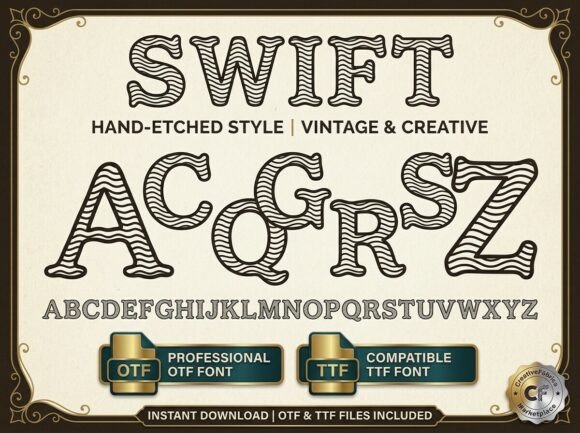
To use Swift effectively, one must first understand what makes it visually distinct from standard serif fonts. It is not merely a font with rough edges or added noise filters. The design DNA of Swift mimics the physical constraints and beauties of traditional engraving. The bold outlines provide necessary structural integrity, ensuring the letterforms hold their shape even when scaled down for packaging or digital thumbnails. Simultaneously, the delicate internal linework creates a sense of depth and shadow that flat vector fonts simply cannot achieve.
This duality is where Swift finds its practical utility. In many vintage revival fonts, the decorative elements compromise legibility. Swift avoids this trap by maintaining strong contrast and clear counters. When you are designing a label that needs to be read through condensation on a glass bottle, or a header that must load instantly on a mobile device, this balance between ornamentation and clarity becomes a critical asset. The font feels etched-by-hand because it respects the logic of the craft, providing a tactile quality that suggests human involvement rather than algorithmic generation.
Elevating Premium Beverage and Hospitality Branding
Perhaps no industry benefits more immediately from Swift’s aesthetic than the premium beverage sector. Craft distilleries, boutique wineries, and artisanal breweries operate in a saturated market where shelf appeal dictates survival. A bottle of small-batch gin or aged whiskey communicates its value before the consumer ever tastes the liquid. Using Swift on a label signals a respect for tradition and process. The intricate linework pairs naturally with textured paper stocks, foil stamping, and embossing, creating a multi-sensory experience that justifies a higher price point.
Beyond alcohol, consider the high-end coffee roaster or the specialty tea blender. These products sell an atmosphere as much as a commodity. A café menu set in Swift transforms a simple list of prices into a curated experience. It tells the customer that the same attention to detail applied to the typography is likely applied to the sourcing and roasting of the beans. However, restraint is key here. Swift works best as a headline or accent font on menus and signage. Pairing it with a clean, neutral body text ensures that the operational information remains accessible while the brand voice retains its vintage prestige.
Artisanal Retail and Boutique Identity
For small business owners in the retail space, specifically those dealing in apothecary goods, leatherwork, jewelry, or bespoke clothing, branding is the primary differentiator against mass-market competitors. Swift serves as a visual anchor for these businesses. When a handmade soap company uses Swift on their packaging, it reinforces the narrative of natural ingredients and slow production methods. The font acts as a seal of authenticity, bridging the gap between the maker’s story and the buyer’s perception.
This application extends to digital storefronts as well. Etsy sellers and Shopify merchants often struggle to make their web presence feel as unique as their physical products. Incorporating Swift into website headers, category titles, or promotional banners can instantly elevate the perceived value of the inventory. It moves the site away from looking like a generic template and toward a cohesive brand identity. For freelancers and agency designers working with these clients, Swift offers a reliable solution to convey "handmade luxury" without resorting to clichéd script fonts that can sometimes feel too informal or difficult to read at smaller sizes.
Editorial Design and Digital Storytelling
Publishers, bloggers, and content creators focused on history, literature, travel, or culinary arts face a unique challenge: how to create a digital reading environment that feels warm and established. Swift excels in editorial headers and drop caps. It sets a tone of authority and nostalgia that prepares the reader for long-form content. Unlike decorative scripts that fatigue the eye, Swift’s structured forms allow it to function effectively in digital layouts where screen resolution varies.
Consider a travel blog documenting historic European cities or a food magazine exploring ancestral recipes. Using Swift for section breaks and article titles creates a visual rhythm that complements photography and prose. It grounds the digital content in a sense of place and time. For educators and academic publishers producing materials on art history or literature, Swift can be used to distinguish primary source quotes or chapter headings, visually separating historical context from modern analysis. This subtle typographic cue helps readers navigate complex texts and enhances the overall learning experience.
Practical Considerations Before Implementation
While Swift is a powerful tool, it requires thoughtful application to avoid common pitfalls associated with display typography. Before downloading or purchasing, consider the technical and aesthetic environment where the font will live.
- Hierarchy is Non-Negotiable: Swift is a display font designed for impact. It should rarely, if ever, be used for body copy, captions, or fine print. Reserve it for headlines, logos, labels, and short callouts. Overusing it will dilute its specialness and create readability issues.
- Background Contrast Matters: Because Swift relies on fine internal linework, it requires sufficient contrast against its background. Dark ink on light paper or white text on dark backgrounds works beautifully. Avoid placing Swift over busy photographic backgrounds or low-contrast textures where the delicate details might get lost or vibrate visually.
- Scale and Reproduction: Always test Swift at the actual size it will be printed or displayed. Those beautiful etched lines may disappear if the font is scaled too small for commercial printing or low-resolution screens. Conversely, at massive scales, ensure the file format supports the detail without pixelation.
- Licensing Compliance: If you are using Swift for commercial projects like product packaging, client branding, or monetized websites, verify the license terms. Desktop licenses typically cover print and static images, while webfont licenses are required for embedding on live sites. Understanding this upfront prevents legal headaches later.
Making the Investment Work for Your Project
Choosing Swift is ultimately a decision about brand positioning. It is not a neutral typeface; it has a strong personality that will influence how your audience perceives your message. Ask yourself if your project genuinely aligns with values of craftsmanship, heritage, and detail. If you are designing for a tech startup focused on futuristic AI or a discount warehouse sale, Swift may send mixed signals. But if your goal is to communicate longevity, quality, and human touch, few tools perform as reliably.
For the freelancer or agency designer, having Swift in your toolkit allows you to offer clients a level of sophistication that free alternatives often lack. It demonstrates an understanding of typographic nuance and historical reference. For the DIY entrepreneur, it provides a shortcut to professional-grade aesthetics, allowing you to compete visually with larger brands. Ultimately, Swift succeeds because it treats vintage design not as a costume, but as a discipline. By infusing your work with the soul of a master engraver, you create designs that do not just capture attention, but earn trust through the quiet confidence of well-executed detail.