Funny Book: A Practical Evaluation of Handwritten Display Typography
In the crowded marketplace of digital typography, finding a handwritten display font that balances aesthetic charm with professional utility is a persistent challenge for designers and marketers. Funny Book enters this space as a distinctive option for creatives seeking to inject warmth and sentimentality into their visual communications. Unlike many script fonts that prioritize ornate complexity over legibility, or casual hand-lettering styles that lack structural consistency, Funny Book attempts to bridge the gap between genuine artistic expression and functional design. For professionals aged 20 to 50 managing brands, events, or personal projects, understanding the specific mechanical and emotional capabilities of this typeface is essential before integrating it into a production workflow.
Defining the Visual Character and Technical Execution
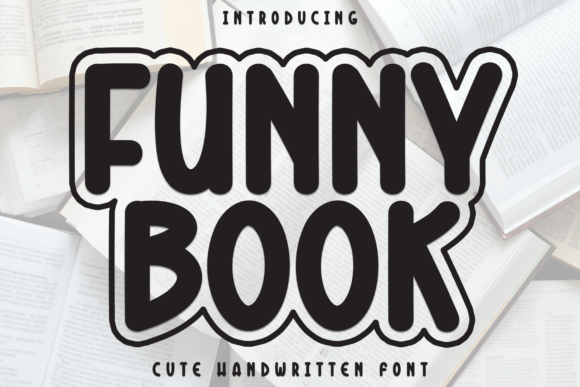
Funny Book is categorized as a handwritten display font, but its execution suggests a deliberate focus on readability alongside stylistic flair. The letterforms exhibit what typographers often refer to as "controlled irregularity." While the strokes mimic the natural variance of analog writing instruments, the baseline alignment and x-height consistency remain stable enough for digital reproduction. This technical discipline is what separates a usable commercial asset from a novelty font that fails in practical application.
The font exudes an aura of warmth not through excessive swashes or decorative ligatures, but through open counters and rounded terminals. These features reduce visual friction, allowing the eye to move across the text with ease even at smaller display sizes. The "lively zest" mentioned in its description manifests in the rhythmic bounce of the characters, which prevents the monotony often associated with digitized handwriting. From a production standpoint, this means the font maintains its personality without sacrificing the clarity required for wedding invitations, greeting cards, or social media graphics where quick comprehension is paramount.
Key Characteristics for Professional Assessment
- Baseline Stability: Despite the handwritten aesthetic, the vertical rhythm is consistent, reducing the need for manual kerning and leading adjustments in layout software.
- Stroke Weight Uniformity: The contrast between thick and thin strokes is moderate, ensuring the font reproduces well across both high-resolution print and standard screen displays.
- Emotional Neutrality with Warmth: It avoids being overly juvenile or aggressively quirky, making it suitable for adult audiences and sophisticated branding contexts.
- Glyph Coverage: Adequate support for standard punctuation and numerals allows for complete sentences and pricing information without breaking the visual style.
Practical Applications and Real-World Performance
Evaluating Funny Book requires looking beyond static specimens to dynamic, real-world usage. Its primary strength lies in short-form copy where the goal is to establish an immediate emotional connection. In wedding stationery suites, for example, the font performs exceptionally well for names, dates, and section headers. It provides the requested "joyous appeal" without competing with the finer details of venue maps or accommodation schedules, which should typically be set in a neutral sans-serif or serif face.
For entrepreneurs and small business owners, Funny Book serves as an effective tool for humanizing corporate messaging. When used in email newsletters, product packaging, or thank-you notes, it signals authenticity and personal attention. However, professionals must exercise restraint. Because the font carries significant visual weight and personality, it functions best as an accent rather than a workhorse. Using it for body text longer than two or three lines will inevitably degrade readability and fatigue the reader. The "vivacious vibrancy" of each letter is an asset in headlines and pull quotes but becomes a liability in dense paragraphs.
In digital marketing contexts, such as Instagram stories or Pinterest pins, the font’s organic texture helps content stand out against polished, algorithmic feeds. It creates a tactile sensation that can increase engagement rates by mimicking the intimacy of a personal note. Marketers should note, however, that because of its distinct character, Funny Book pairs poorly with other decorative fonts. It demands negative space and simple supporting typefaces to function effectively within a hierarchy.
Audience Fit and Strategic Integration
Determining whether Funny Book aligns with your specific needs depends heavily on your target demographic and brand voice. The font is ideally suited for creators, educators, and freelancers whose work relies on approachability and trust. It resonates particularly well with audiences who value craftsmanship and personal touch over sterile perfection.
Ideal Use Cases
- Event Stationery: Wedding invites, baby shower announcements, and birthday cards where sentimentality is the primary design driver.
- Artisanal Branding: Packaging labels, craft fair signage, and boutique e-commerce headers that require a handmade aesthetic.
- Personal Communication: Digital greeting cards, newsletter sign-offs, and community updates from educators or coaches.
- Social Media Content: Quote overlays, announcement teasers, and interactive story elements requiring high visual impact.
Conversely, professionals in highly regulated industries such as finance, law, or medical technology may find the font’s informality misaligned with compliance standards or client expectations. Similarly, minimalist tech brands aiming for futuristic precision will likely find the nostalgic warmth of Funny Book contradictory to their core identity. The decision to use this typeface should always be rooted in audience analysis rather than current design trends.
Quality, Usability, and Workflow Considerations
From a technical usability perspective, Funny Book demonstrates reliable performance across major design platforms including Adobe Illustrator, Canva, and Figma. The vector outlines are generally clean, minimizing rendering artifacts at various scales. For freelancers and agencies working under tight deadlines, the font’s inherent balance reduces the time spent on optical corrections. This efficiency is a tangible value proposition; while free alternatives exist, they often require extensive manual tweaking to achieve a professional finish, negating any initial cost savings.
However, users should be aware of potential limitations. As with many display fonts, all-caps settings should be avoided unless specifically designed for titling, as the uniform height destroys the natural cadence of handwriting. Additionally, while the font supports standard Latin characters, those working with multilingual campaigns must verify extended language support before purchase to avoid fallback fonts disrupting the design cohesion. Testing the font in the actual output medium—whether that is matte cardstock, glossy packaging, or mobile screens—is a non-negotiable step in the evaluation process. What looks warm and inviting on a backlit monitor may appear muddy or too delicate when printed on uncoated paper.
Long-Term Value and Design Longevity
Trends in handwritten typography cycle rapidly, moving from messy grunge to elegant calligraphy and back again. Funny Book occupies a middle ground that offers better longevity than hyper-trendy scripts. Its foundation in classic informal penmanship rather than contemporary internet aesthetics suggests it will remain relevant for several years. For businesses investing in brand assets, this durability matters. Rebranding due to dated typography is costly and disruptive.
The font’s versatility also contributes to its long-term ROI. Because it works equally well for celebratory events and everyday business communication, it can serve as a recurring asset across multiple campaigns and seasons. A bakery might use it for holiday specials in December and spring menu updates in April without the font feeling repetitive or stale. This adaptability makes it a pragmatic choice for solopreneurs and small teams who cannot afford to license new display fonts for every project.
Making an Informed Selection Decision
Ultimately, Funny Book represents a competent solution for designers seeking to operationalize warmth and positivity. It succeeds because it treats handwriting as a discipline rather than merely an effect. The font delivers on its promise of genuine sentimentality while respecting the practical constraints of modern graphic design. For the professional evaluating this asset, the key questions are not just about aesthetics, but about fit: Does this level of informality match my audience's expectations? Do I have the layout skills to leverage its strengths while mitigating its limitations? Is the technical quality sufficient for my intended distribution channels?
If your objective is to create designs that feel personally crafted yet professionally executed, Funny Book warrants serious consideration. It is most valuable when treated as a strategic element of visual hierarchy rather than a default setting. By understanding its specific characteristics and appropriate applications, creatives can harness its lively zest to produce work that is not only visually appealing but also functionally effective and emotionally resonant. The investment in this typeface pays dividends when it enables clearer communication of joy and authenticity, transforming standard design tasks into opportunities for meaningful connection.