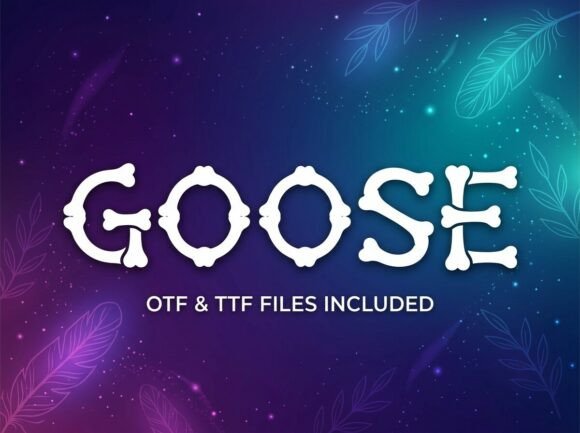
Unearthing Goose: The Anatomy of a Primitive-and-Playful Display Typeface
In the vast ecosystem of digital typography, designers often find themselves choosing between two extremes: the sterile precision of modern geometric sans-serifs or the ornate complexity of traditional serifs. However, a unique category of display typefaces exists that bridges the gap between structural integrity and whimsical character. Enter Goose, a skeletal display typeface that captures a primitive-and-playful soul unlike any other font in contemporary design. By meticulously constructing letterforms from anatomical bone shapes and joint-like structures, Goose offers a visual language that is equal parts archaeological artifact and modern graphic statement.
Understanding Goose requires looking beyond standard typographic metrics. It is not merely a collection of glyphs; it is an exercise in biomimicry applied to lettering. For independent museums, boutique brands, event planners, and social media creators, this typeface represents a powerful tool for storytelling. This article explores the anatomy, application, and strategic value of Goose, helping you understand how to unearth its full potential in your next creative project.
The Anatomical Architecture of Goose
To appreciate why Goose stands out, one must first understand its construction. Most typefaces are built on grids and mathematical curves. Goose, conversely, is built on biology. The letterforms possess a sturdy structural weight that mimics the load-bearing capacity of actual skeletal systems. Where a traditional "O" might be a perfect circle, in Goose, it resembles a pelvic bone or a cranial structure. Crossbars in letters like "A" or "H" function as joints, connecting vertical strokes with the organic irregularity of cartilage and ligament.
This anatomical approach creates a rhythm that feels inherently natural rather than manufactured. The boldness of the font does not come from artificial thickening but from the implied density of bone matter. This distinction is crucial for designers seeking authenticity. When viewers encounter Goose, they are subconsciously processing organic forms, which evokes feelings of history, nature, and tangible reality. It transforms text from mere information into a tactile experience, making it a premier choice for projects that need to feel grounded yet lively.
Balancing the Primitive and the Playful
A common misunderstanding about skeletal or "bone-based" fonts is that they are inherently morbid or strictly reserved for Halloween aesthetics. While Goose certainly excels in spooky contexts, limiting it to horror ignores its primary design achievement: playfulness. The genius of Goose lies in its duality. It acknowledges the macabre origins of its inspiration while celebrating the joy of discovery.
This balance is achieved through proportion and spacing. The letterforms are robust and rounded rather than sharp and jagged. The joints have a bouncy quality, suggesting movement and life rather than static decay. This makes the typeface approachable for general audiences, including children and families. It communicates that the subject matter—whether fossils, pets, or history—is something to be celebrated and explored, not feared. In educational settings or family-friendly branding, this tonal flexibility allows Goose to convey seriousness of content without sacrificing engagement.
Strategic Applications in Modern Branding
Typography is never just decoration; it is a strategic business asset. Goose serves specific niches where standard corporate fonts fail to communicate the necessary brand values. Below are key sectors where this typeface provides distinct advantages.
Independent Natural History Museums
Natural history institutions often struggle with branding that feels either too academic or too cartoonish. Independent museums, in particular, need to signal both scientific credibility and community accessibility. Goose acts as the perfect mediator. Its archaeological personality aligns with the subject matter of paleontology and anthropology, reinforcing the museum's mission visually. Simultaneously, its quirky character invites curiosity rather than intimidation.
- Exhibition Signage: Using Goose for exhibit titles creates an immediate thematic connection to bones and fossils before the visitor even reads the content.
- Merchandise: T-shirts and tote bags featuring Goose tap into the "museum gift shop" aesthetic that has become a popular fashion trend among younger demographics.
- Educational Materials: Worksheets and guides for school groups benefit from a font that feels fun and hands-on, encouraging learning through visual association.
Dog Boutiques and Pet Services
At first glance, a skeletal font might seem counterintuitive for pet businesses. However, consider the cultural intersection of dogs and bones. Goose leverages this primal association with sophistication. Unlike clip-art paw prints or generic bubble letters, Goose suggests a boutique level of quality. It implies that the business understands the fundamental nature of animals. For dog walkers, groomers, and artisanal treat makers, this typeface signals a brand that is earthy, honest, and deeply connected to canine instincts.
Furthermore, the sturdy weight of Goose ensures legibility on packaging and small tags. In retail environments where shelf impact is critical, the rhythmic boldness of these bone-shaped letterforms cuts through visual clutter while maintaining a warm, organic vibe that appeals to pet owners.
Digital Presence and Social Media Impact
In the digital age, typography must perform across screens of varying sizes and resolutions. Goose’s high-impact design translates exceptionally well to social media headers and digital advertising. Platforms like Instagram and TikTok favor visuals that stop the scroll, and the unique silhouette of Goose achieves this instantly.
For prehistoric-and-fun content creators, science communicators, and niche hobbyists, Goose provides instant brand recognition. Because the font is so distinctive, followers begin to associate the specific shape of the letters with the creator’s voice. This builds a cohesive visual identity that extends beyond logos into post overlays, story highlights, and video thumbnails.
- Contrast is Key: Pair Goose with clean, neutral sans-serif body text. Let the skeletal display font do the heavy lifting for headlines while ensuring readability for detailed captions.
- Color Psychology: While black and white is classic, experimenting with earth tones (ochre, terracotta, sage) enhances the archaeological feel. Conversely, neon accents against dark backgrounds can push the aesthetic toward modern retro-spooky.
- Motion Graphics: The joint-like structures of Goose lend themselves beautifully to animation. Imagine letters assembling like a skeleton or bouncing with elastic easing; this adds a layer of kinetic energy to video content.
Best Practices for Implementation
To use Goose effectively, designers must respect its nature as a display typeface. It is not designed for long-form reading. Attempting to set paragraphs in Goose will result in poor legibility and visual fatigue. Instead, treat it as an illustrative element.
Contextual awareness is paramount. Always consider the emotional response of your specific audience. For a veterinary clinic, the playful bone shapes might be appropriate for a puppy adoption campaign but potentially insensitive for oncology or end-of-life care communications. Understanding the nuance of the typeface prevents tonal mismatches.
Additionally, pay close attention to kerning. Because the letterforms are based on irregular organic shapes rather than uniform blocks, manual adjustment is often necessary to create harmonious word shapes. The negative space between the "bones" is just as important as the positive space; allowing the letters to breathe preserves the primitive rhythm that defines the typeface’s character.
Why Unique Typography Matters Today
We live in an era of algorithmic homogenization, where templates and AI-generated assets often lead to a sameness in visual culture. Choosing a typeface like Goose is an act of differentiation. It signals to the audience that a human hand and a specific creative intent were involved in the design process.
For beginners in design, exploring specialized typefaces like Goose is an excellent educational exercise. It teaches the importance of matching form to function and demonstrates how letterforms carry cultural and emotional baggage. For experienced professionals, it serves as a reminder that rules can be bent when the concept demands it. Goose proves that structure and whimsy are not mutually exclusive; when fused correctly, they create something that resonates on a visceral level.
Ultimately, Goose is more than a novelty font. It is a sophisticated design solution for brands and creators who wish to connect with the ancient, the natural, and the joyful aspects of the human experience. By unearthing this unique typeface and applying it with intention, you transform simple text into a memorable artifact of modern creativity. Whether you are branding a museum, launching a pet product, or designing a spooky invitation, Goose offers a foundation that is structurally sound and endlessly expressive.